
Interactive Tool Try the Film Studio →
Call (610) 735-7064
Get an Instant Estimate
Mon to Fri · 9AM to 5PM
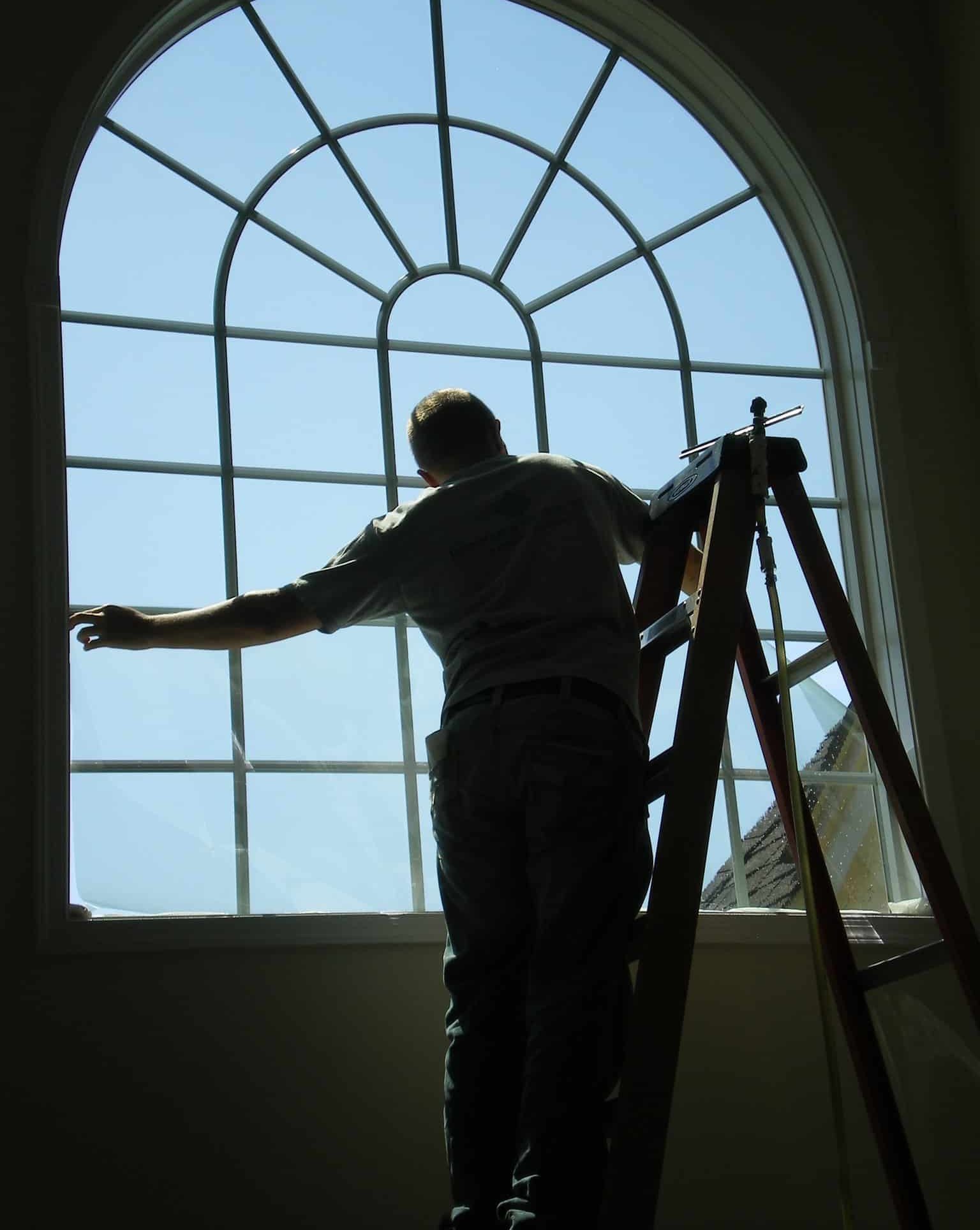
School districts and public building managers in Southeastern Pennsylvania gain a cost-justified, code-compliant method of reinforcing vulnerable...
The school board meeting is next Thursday. Your facilities director has been asked to present a physical security update, and the first slide shows the main entry vestibule: single-pane aluminum storefront glass, original to the 1972 construction, with sidelites flanking both sides of the door. Anyone who watches security footage from forced-entry incidents recognizes that configuration immediately. A determined person can be through that glass in under five seconds. Your lockdown protocol assumes staff have time to respond. Five seconds doesn't give them that time.
Full window replacement with laminated security glass is the right long-term answer for a lot of that glazing. It's also $40 to $100 per square foot, and your capital improvement budget isn't structured for that kind of spend across an entire building in one cycle. So the question facilities managers across Montgomery County, Chester County, Bucks County, and Delaware County keep asking is: what's the realistic option that actually works, passes documentation requirements, and can be installed without shutting down classrooms?
Anti-intrusion security film is that option. Not because it's the only answer, but because it's the right answer for most Pennsylvania public buildings working within real budget constraints. Sun Control Specialists has been installing Solar Gard anti-intrusion security film on school and municipal glass across southeastern Pennsylvania for over 27 years. Here's what you need to know before you bring this to your school board or township supervisors.
Security film does not make glass unbreakable. That distinction matters, and any installer who implies otherwise is misrepresenting the product. What security film does is hold shattered glass together in a bonded matrix after impact, so a broken pane stays in place rather than falling away and opening a clear path for entry.
Standard single-pane glass, when struck hard, shatters and falls. An intruder steps through in three to five seconds. With properly specified and installed anti-intrusion film, that same impact fractures the glass but the film holds the fragments together and keeps the pane attached to the frame. The intruder now has to strike the same point repeatedly to work through the bonded glass layer. That effort is visible, audible, and slow. What was a five-second breach becomes a 60-to-90-second or longer forced-entry attempt, which is the operational window your lockdown protocol needs to engage and law enforcement needs to respond.
The delay is the security benefit. It's not a barrier that stops entry permanently. Think of it the way you think about locked interior doors during a lockdown: they don't stop a determined person indefinitely, but they buy time, and time is what saves lives.
Solar Gard-certified films installed by Sun Control Specialists are engineered specifically for this time-delay performance. The film's adhesive system is designed to bond to the glass surface under the stress of repeated impact without delaminating, which is what maintains that holding function throughout a forced-entry attempt. Films that aren't properly specified or properly installed can lose that bond under repeated stress, which defeats the purpose.
There's also a secondary safety benefit worth noting for school administrators specifically: even when no intrusion is involved, film prevents glass shards from becoming a projectile hazard during severe weather events, equipment impacts, or accidental breakage. That alone matters in a building full of students.
Film thickness is measured in mils (thousandths of an inch), and the difference between a 4-mil film and a 12-mil film is not marginal. They are engineered for different threat levels, and specifying the wrong thickness is the most common mistake in security film projects that underperform.
Entry-level safety films in the 4- to 7-mil range address basic glass retention after breakage. They're appropriate for interior glass partitions, interior sidelites, and situations where the primary concern is accident-related breakage rather than forced entry. They will not provide meaningful delay against a deliberate forced-entry attempt using a blunt object.
True anti-intrusion films for schools and public buildings begin at 8 mils. High-priority glazing locations, including entry vestibules, administrative office reception windows, and ground-floor perimeter windows near parking areas, typically warrant 12- to 14-mil or heavier specification. The thicker the film, the more professional the application requirements. Heavy-mil films require wet-application technique with precise squeegee work and cure time management. Improper installation of thick films results in edge lifting, bubbling, and eventual delamination that compromises the film's holding performance exactly when it matters.
Sun Control Specialists conducts a glazing assessment before specifying film. The right thickness depends on the glass type, the frame condition, the location within the building, and the threat profile for that specific glazing unit. A gymnasium exterior door doesn't need the same specification as the sidelight next to your main entry door hardware. Blanket-specifying one film across an entire building wastes budget on some glazing and under-protects the highest-risk locations.
When you're presenting a security upgrade to a school board or township supervisors, product certification is not optional. Unlabeled commodity films that lack traceable compliance documentation create liability exposure and will not hold up to scrutiny if your district is pursuing Safe Schools funding or if an incident ever leads to litigation questioning whether the installation met recognized safety standards.
The two compliance standards that matter most for Pennsylvania school and municipal applications are CPSC 16 CFR 1201 (safety glazing performance) and Underwriters Laboratories listings. Solar Gard products carry both, and Sun Control Specialists can provide that documentation in a format suitable for your board presentation or grant application.
Pennsylvania's Safe Schools program increasingly requires product certification documentation when districts apply for security improvement funding. Having a UL-listed product from a certified installer puts your application in a materially stronger position than a competing proposal using uncertified film from a vendor who pulled it from a distributor catalog.
Ask any film vendor you're evaluating for their UL listing documentation and their installer certification. If they can't produce both immediately, that tells you something about how the installation will hold up to scrutiny later. Sun Control Specialists installs Solar Gard film with full certification traceability, which means your facilities documentation package is complete from day one.
For grant purposes and insurance reporting, it's also worth noting that documented security improvements using certified products can affect your district's insurance risk profile. Check with your carrier before finalizing your upgrade scope, because that conversation sometimes changes the priority order of which buildings get addressed first.
Film anchored to the window frame with structural silicone or mechanical fasteners performs significantly better than film alone under repeated impact, because it prevents the entire glass unit from being displaced inward even after the glass fractures.
Without an attachment system, a heavily struck filmed pane can hold together but still be pushed inward out of the frame if the glazing compound fails. In newer construction with high-quality aluminum or vinyl framing, film alone at appropriate thickness is often sufficient. In the 1960s-through-1990s aluminum storefront systems that are common in southeastern Pennsylvania school buildings, the original glazing compound may be dried, cracked, or partially failed. In those frames, an attachment system is frequently the right call because the weak point isn't the glass, it's the frame-to-glass bond.
Sun Control Specialists evaluates existing frame conditions as part of the site assessment before any security film project. The assessment looks at glazing compound condition, frame integrity, glass type, and glazing rebate depth. A frame-to-film attachment system on the sidelites flanking your main entry door is often the highest-return-per-dollar security investment a school can make, because those sidelites allow a person to break through and reach interior door hardware directly without ever having to defeat the lock.
If your building was constructed before 1985 and hasn't had glazing updates since original construction, plan for the possibility that some frame sections will need remediation before film can be properly installed. A qualified installer will flag that during assessment rather than after the film is already on the glass.
Not all glass in a school or public building represents equal risk. A phased approach that addresses highest-vulnerability glazing first gives you maximum security return per dollar and lets you work within annual budget cycles rather than requiring a single large capital expenditure.
The priority sequence for most southeastern Pennsylvania school buildings looks like this:
Sun Control Specialists provides site assessments for school districts and municipal buildings to map this priority sequence against actual glazing conditions and produce a phased installation plan that can be presented with budget figures attached to each phase.
Anti-intrusion security film is equally applicable to any Pennsylvania public building with accessible ground-floor glazing, and the case for it in municipal settings is in some ways more straightforward than in schools because municipal facilities rarely have to navigate parent communication or classroom scheduling around installation.
Chester County, Delaware County, Montgomery County, and Bucks County municipal buildings have increasingly included security glazing upgrades in facility improvement cycles following updated threat assessments. The application logic is the same: ground-floor glass accessible from grade level represents a forced-entry vulnerability, and film provides a documented delay without altering the visual character of the building.
Libraries present a specific challenge worth addressing directly. An open-access public building with floor-to-ceiling glass designed to feel welcoming is the opposite of a security-hardened facility, and library directors are rightly resistant to any security measure that makes their building feel less accessible. Clear anti-intrusion security film maintains full visible light transmission while significantly increasing resistance to forced entry. The glass looks identical after installation. The building still feels open. The difference is that a person who strikes that glass to gain entry is no longer through in five seconds.
Courthouses and township administration offices with public-facing counter windows have an additional concern: the glass separating staff from members of the public. Anti-intrusion film on those windows addresses both the forced-entry scenario and the personal safety scenario for employees working behind public-access counters. Sun Control Specialists works with municipal facility directors and county risk managers across southeastern Pennsylvania on exactly this type of project.
A meaningful portion of the school building stock in Montgomery, Chester, Delaware, and Bucks Counties was constructed between 1960 and 1990. That building era produced aluminum storefront glazing systems that are now 35 to 60 years old. The glass is almost universally single-pane. The glazing compound is frequently compromised. The frames are often original to construction.
These buildings were not designed with forced-entry resistance in mind, and the cost of bringing them fully up to current security glazing standards through full glass replacement is not realistic within typical Pennsylvania school district or municipal budget structures. Security film installed on those existing frames is the practical path to a meaningful security upgrade within a single capital cycle.
Southeastern Pennsylvania's summer sun also creates a secondary benefit that's worth mentioning to teachers and staff who may be concerned about the security film project: anti-intrusion films block up to 99% of UV radiation, which addresses real classroom fading problems on south- and west-facing exposures. Educational materials, furnishings, and student artwork in unprotected classrooms show measurable fading within a few years of installation. Clear security films handle UV rejection without reducing visible light transmission, so classrooms stay bright. That's a practical point to make when you're briefing faculty before an installation.
Sun Control Specialists serves school districts and municipal clients across the southeastern Pennsylvania service area including the Main Line, Chester County, Montgomery County, Delaware County, and Bucks County. We're familiar with the regional building stock, the grant documentation requirements, and the board presentation process.
Sun Control Specialists has been installing Solar Gard window film across southeastern Pennsylvania for over 27 years. Our security film work includes school districts, municipal buildings, libraries, and courthouses across the region. We're not a general contractor who offers film as an add-on service. Window film is what we do, and security film is a specific technical discipline within that work that requires proper specification, certified products, and professional installation technique.
We install Solar Gard Armorcoat security films, which carry the UL listings and CPSC compliance documentation that Pennsylvania facility managers need for board presentations, grant applications, and insurance documentation. Every project starts with a site assessment, not a price quote. We need to see the glass, the frames, and the building configuration before we can tell you what film and what installation approach is right for your building.
Our anti-intrusion security film installations are completed in phases designed around your operational calendar. School projects don't require classroom closures. Municipal building projects can be sequenced to avoid disrupting public-access hours. We've done this long enough to know how to work around a building that can't shut down.
If you're preparing a security upgrade presentation for your board or supervisors, call us before you finalize the scope. We can walk through the building with you and give you the technical grounding to present this accurately and credibly.
Here's what matters: Anti-intrusion security film converts vulnerable single-pane glass from a five-second breach point into a 60-to-90-second forced-entry effort, which is the operational delay your lockdown protocol and law enforcement response actually require. For southeastern Pennsylvania school districts and municipal buildings working within realistic budget constraints, properly specified and certified security film installed on priority glazing locations is the most cost-effective security upgrade available per dollar spent. It installs without structural demolition, maintains classroom lighting, blocks UV, and produces the certified documentation that Pennsylvania Safe Schools funding and board oversight require.
Your next step: Request a free estimate from Sun Control Specialists or call (610) 735-7064. We serve school districts and municipal clients across the Main Line, Chester County, Montgomery County, Delaware County, and Bucks County.
No, and any product that claims otherwise is being misrepresented. Anti-intrusion security film holds shattered glass in place after impact, requiring an intruder to work repeatedly against the same point rather than stepping through on first strike. The result is a significant time delay, typically turning a five-second breach into a 60-to-90-second or longer effort. That delay is what allows lockdown protocols to engage and law enforcement to respond. The film is a delay mechanism, not an impenetrable barrier.
Film installation is far less disruptive than window replacement. There's no structural demolition, no dust, and no extended curing period that requires a room to be sealed off. Most school security film projects are phased around the school calendar, with installation scheduled during evenings, weekends, or school breaks. Individual classroom windows can typically be filmed and back in service within hours. Entry vestibules and lobby areas can often be completed over a single weekend. Sun Control Specialists plans installation sequencing around your operational calendar as part of the project scope.
Solar Gard products carry UL listings and CPSC 16 CFR 1201 compliance documentation, which are the two standards that matter most for Pennsylvania school district and municipal security upgrade reporting. Sun Control Specialists provides full product certification documentation with every project, in a format suitable for board presentations, grant applications, and insurance reporting. If you're pursuing Pennsylvania Safe Schools funding, that certification documentation is a required component of the application.
Clear anti-intrusion security films are available and maintain full visible light transmission after installation. The glass looks identical from inside and outside the building. For classrooms and public-facing municipal buildings where maintaining a bright, open appearance is important, clear security film is the standard specification. There is also no effect on UV blocking performance from the clarity of the film. Clear films at appropriate mil thickness block up to 99% of UV radiation while leaving the visual character of the glazing unchanged.
They can, but frame condition assessment is essential before installation. Aluminum storefront systems from that era may have dried or partially failed glazing compound, which can compromise the film-to-frame bond that's critical to performance under impact. Sun Control Specialists evaluates existing frame conditions during the site assessment phase. In cases where the glazing compound has failed, a mechanical attachment system using structural silicone at the frame perimeter is recommended to ensure the glass unit stays in place even after fracture. That assessment happens before any film is specified or installed, not after the fact.