
Interactive Tool Try the Film Studio →
Call (610) 735-7064
Get an Instant Estimate
Mon to Fri · 9AM to 5PM
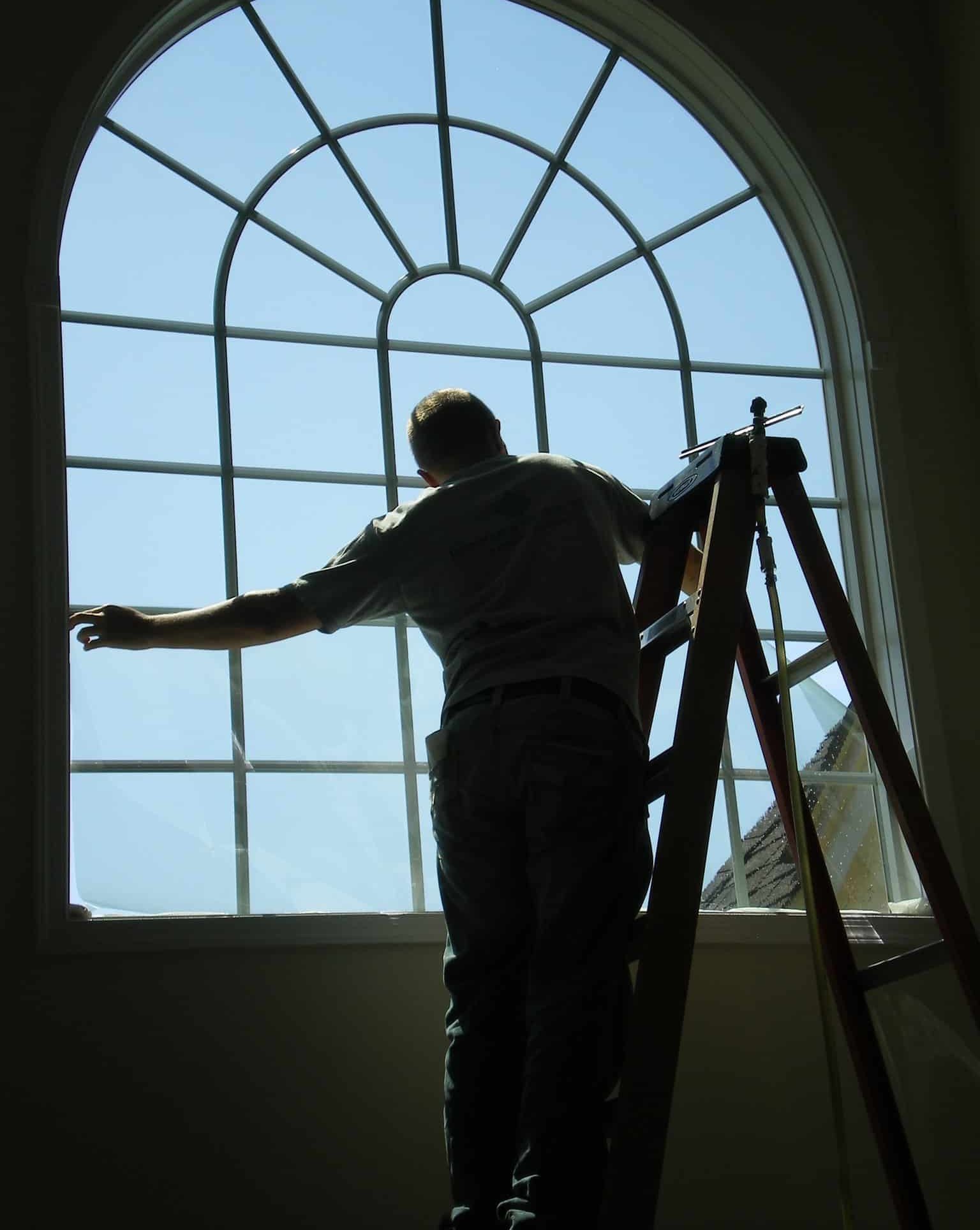
Preservation-compliant UV, safety, and energy film for historic homes, landmark buildings, churches, courthouses, and museums, applied without changing how the glass looks from the street.
Historic glass carries a different set of rules than a new office or a tract home. The film cannot reflect, it cannot darken the facade, and it has to satisfy the people who guard the building: preservation commissions, landmark boards, and the standards tied to National Register listing. Sun Control Specialists has spent over 27 years working inside those constraints across southeastern Pennsylvania. We specify low-reflectance, appropriate-VLT film that holds the original appearance of the glass while cutting the UV that fades interiors and adding safety film that holds old, fragile glazing together.
Low-reflectance film at a visible-light level chosen to match the existing glass, so the building reads the same from the public way. We document the specification for review by your historic commission or landmark board.
Learn moreBlocks up to 99% of ultraviolet light, the single largest cause of fading in woodwork, plaster, oil paintings, textiles, archival paper, and period furnishings. Near-clear options keep interiors bright while protecting the collection.
Learn moreBonds aging single-pane and original mullioned glass so a cracked or broken pane holds in the frame instead of falling. A practical answer for churches, courthouses, and public buildings where replacing the glass is not an option.
Learn moreLooking for the full picture first? Start at our window film installation hub, then come back here for the preservation-specific details.
Non-reflective film at a matched visible-light level means the facade looks unchanged from the sidewalk. That is what most preservation guidelines actually require.
Interior-applied film is removable and adds no permanent alteration to historic glass, which lines up with the reversibility most landmark standards favor.
Up to 99% UV rejection shields original woodwork, murals, stained finishes, artifacts, and textiles from the fading that ordinary glass does nothing to stop.
Solar film cuts heat gain and cooling load on single-pane historic glazing, so you improve comfort and operating cost without ripping out the original windows.
Safety film keeps brittle old panes in the frame if they crack, reducing the hazard and the cost of an emergency reglaze on irreplaceable glass.
We provide product specifications, visible-light and reflectance data, and installation certificates formatted for preservation commissions, landmark boards, and grant files.