
Interactive Tool Try the Film Studio →
Call (610) 735-7064
Get an Instant Estimate
Mon to Fri · 9AM to 5PM
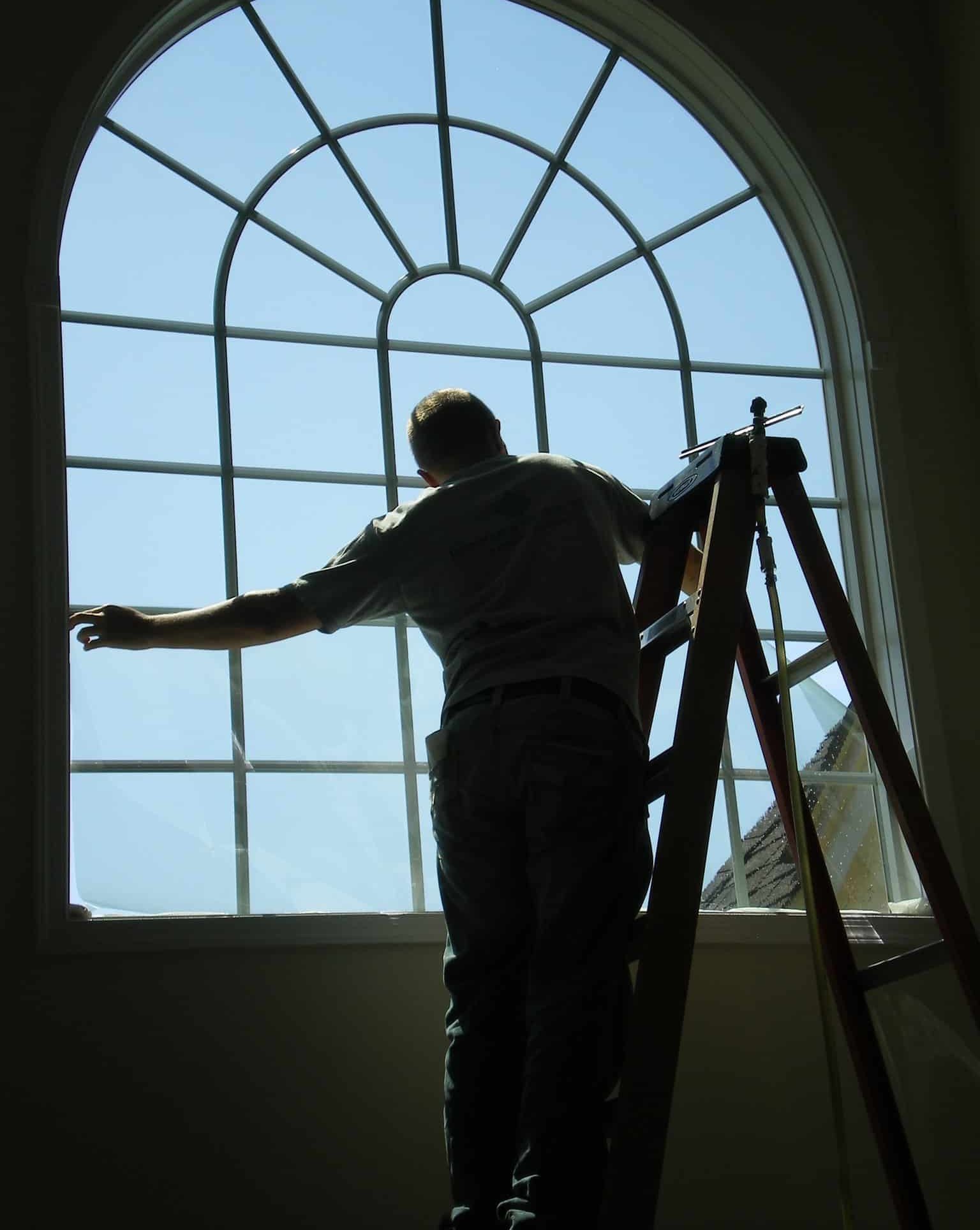
Wayne homeowners gain privacy in bathrooms, entryways, and street-facing rooms without sacrificing natural light or installing bulky window treatments
You've got a bathroom window that faces your neighbor's driveway. Every morning, you're choosing between privacy and natural light. The blinds stay down, the room feels like a cave, and you've looked at frosted glass replacements long enough to know they cost more than you want to spend. If you own an older home in Wayne, this situation shows up in more rooms than just the bathroom. Sidelights next to the front door. The kitchen window above the sink. A dining room that looks directly into the neighbors' yard. These are real, daily frustrations in a neighborhood full of colonials and farmhouses where window placement wasn't designed with 21st-century lot density in mind.
Decorative window film solves these problems without touching the glass itself. No replacement. No permanent etching. No curtains blocking the afternoon light you actually want. Sun Control Specialists has been installing Solar Gard decorative films across Wayne and the Main Line for over 27 years, and the questions we hear most often aren't about heat or UV. They're about privacy, aesthetics, and what the film will actually look like once it's on the glass. This article covers what's available, what works best for specific Wayne home situations, and how to make a confident decision before calling anyone.
Frosted window film diffuses incoming light so a room stays bright while blocking direct sightlines from outside. Unlike blinds or curtains that either give you privacy or natural light but rarely both, frosted film does the job without the hardware. For Wayne homeowners dealing with street-facing bathroom windows, sidelights beside the front entry, or kitchen windows over the sink, this is typically the first film worth considering.
In older Wayne colonials and farmhouses, single-pane windows near property lines create real exposure. A frosted film applied to the interior glass surface creates the visual effect of etched or sandblasted glass at a fraction of the cost. The light transmission stays high. The privacy is consistent regardless of whether a light is on inside at night, which is where sheer curtains fall short.
Frosted film works across a wide range of glass types, which matters in Wayne's older housing stock where you'll find original single-pane windows, replacement double-pane units, and everything in between. Installation is straightforward on flat glass surfaces. Shower enclosures, sidelight panels, and transom windows are all practical candidates.
One thing to keep in mind: frosted film is not completely opaque. It creates a diffused view, not a blackout. Silhouettes may still be visible if someone is standing close to the glass on either side. For applications where you need full opacity, a higher-density frosted or a gradient film with a more opaque base is a better fit. The right density depends on the window's location, its distance from neighboring structures, and how much light transmission you want to preserve.
Sun Control Specialists carries Solar Gard frosted films in multiple opacity levels. A site visit gives us the context to recommend the right density for each window, rather than guessing from a catalog.
Gradient window film transitions from opaque at the lower portion of the glass to fully clear at the top, giving you ground-level privacy without losing sky views or overhead natural light. It's a contemporary solution that works especially well in Wayne's newer construction and renovated homes where large windows in home offices, dining rooms, or stairwells create a visibility problem that frosted film would solve too aggressively.
The logic is straightforward. Ground-level visibility into a home office or a dining area is the actual concern. What's happening above the eye-line typically isn't. A gradient film addresses the specific problem without making a large window feel smaller or darker. The transition can be positioned at different heights on the glass depending on the room layout and the sightline from outside.
This film style is popular in Wayne homes where the owner wants to preserve an architectural feature, like a tall window or a two-story foyer glass panel, while managing what neighbors or passersby can see. It gives the window a designed, intentional look rather than the patchwork appearance that partial curtains or café-style blinds create.
Gradient films are also worth considering for home staging. A staged home needs to feel open and bright during showings. Window coverings that block light work against that goal. A gradient film keeps the room airy while preventing a staged interior from looking directly exposed during an open house. It stays with the home if the new owner wants it, or it can be removed cleanly if they don't.
Sun Control Specialists can walk through gradient positioning options during a consultation so you're not guessing at where the opacity should end and where the clear portion should begin.
Patterned and stained glass films are the most visually variable options in the Solar Gard decorative lineup, and also the most misunderstood in terms of what they can realistically achieve. Used correctly, they add architectural character without permanent alteration to the glass. Used in the wrong application, they look like an afterthought.
Patterned films come in geometric, floral, and classic motifs across dozens of styles. They're applied to the glass surface like any other film, but the visual result is a textured or etched appearance rather than a flat frosted look. These films work well on interior glass panels, cabinet glass, or any window where a design detail is part of the goal rather than pure privacy. Because they're removable, they're a practical option for Wayne homeowners who want design flexibility. Staged homes, rentals, and anyone who isn't sure they want a permanent aesthetic change can commit to a patterned film without committing to it permanently.
Stained glass film is a different category. These films replicate the look of traditional leaded glass, with color fields and defined line work that reads convincingly on foyer windows, transoms, and interior glass panels. Many Wayne and Main Line homes were built with architectural details that include or imply decorative glass. When original leaded panels are damaged, missing, or simply absent from a restoration project, stained glass film offers a visually appropriate stand-in at a cost that doesn't require custom fabrication.
The honest limitation: stained glass film looks best when backlit by natural light. On a north-facing window or a panel that doesn't receive direct sun, the color reads flat. Placement matters as much as pattern selection. A professional site visit before ordering film is worth doing. Sun Control Specialists' Film Studio tool lets Wayne homeowners preview specific patterns and color combinations on their actual windows before anything is ordered or installed. That eliminates the guesswork that leads to regret.
High-quality decorative films from Solar Gard block up to 99% of UV radiation, which makes them functionally protective as well as visually appealing. This matters in Wayne homes more than people typically expect when they first start asking about decorative film options.
Wayne's housing stock includes a significant number of older homes with southern or western exposures and large, original windows. Those windows admit a lot of light, which is part of their appeal. The problem is that UV radiation travels with visible light, and it's the primary driver of fading in hardwood floors, area rugs, upholstered furniture, and window treatments. Homes with antique or period furniture face an accelerated fading risk when large windows go unprotected.
A frosted, gradient, or patterned film that also blocks UV gives you two benefits from one installation. The room gets privacy or a design upgrade, and the contents of the room get meaningful protection against sun damage. That's a better outcome than a film that only addresses one problem.
UV protection is not the same as heat reduction. Decorative films are optimized for visual effect, not solar heat gain control. If a Wayne home has a significant heat problem in a sun-facing room, a solar control film is the right starting point, and decorative film may be layered as a secondary consideration. If UV protection and privacy are the primary goals, decorative film does both jobs well. Sun Control Specialists carries Solar Gard films that address heat, UV, and aesthetics separately and in combination, so the recommendation depends on what the room is actually dealing with.
As an authorized Solar Gard dealer, we install films built to handle southeastern Pennsylvania's seasonal temperature swings. Adhesive stability from summer humidity to January cold is part of what separates quality film from budget alternatives.
The single most useful step Wayne homeowners can take before committing to any decorative film is to use Sun Control Specialists' Film Studio preview tool, which lets you see specific films applied to your actual windows before anything is ordered. Film selection is a visual decision, and looking at a catalog swatch does not tell you how a film will read on a 36-inch bathroom window or a two-panel stairwell light.
Here are three things you can do right now to move forward with clarity:
Most residential decorative film projects in Wayne are completed in a single day. Professional installation ensures proper adhesion, clean edge trimming, and a bubble-free result. On a patterned or frosted film, misalignment is immediately visible, which is why precision during installation matters as much as film selection.
Sun Control Specialists provides written quotes with no obligation, so you can compare film types and plan accurately before committing to anything.
Wayne's housing stock creates a specific set of window film challenges that generic advice doesn't address well. The neighborhood is dense with original colonials, farmhouses, and Main Line-era estates that weren't built with today's lot proximity in mind. Windows are large, sometimes single-pane, and often positioned in ways that create real sightline problems between neighboring properties.
At the same time, these homes have architectural character worth preserving. Replacing original glass or adding heavy window treatments works against the aesthetic that makes these properties appealing. Decorative film fills that gap. It addresses the functional problem without altering the glass or covering it with hardware that changes how the room looks and feels.
Southern and western exposures in Wayne also mean UV exposure that compounds over time on hardwood floors and period furniture. Many Wayne homeowners don't connect film to UV protection because they think of film as a product for commercial buildings or modern construction. That assumption costs them in fading damage that's entirely preventable.
Sun Control Specialists serves Wayne, the broader Main Line, and surrounding Chester County and Montgomery County communities. Our service area includes the neighborhoods where these specific combinations of older glass, dense lots, and period architecture create the most frequent need for decorative film solutions. We know the building types, we know the sun angles, and we know what works.
Sun Control Specialists has been installing Solar Gard window film in southeastern Pennsylvania for over 27 years. That's not a credential we mention to fill space. It means we've worked on original Wayne farmhouse glass, Main Line estate transoms, and every variation of single-pane privacy problem that comes up in older residential construction.
We're an authorized Solar Gard dealer, which means the decorative films we install come with manufacturer-backed warranties and consistent optical quality. Solar Gard's adhesive formulations are tested for the seasonal temperature swings southeastern Pennsylvania delivers. Cheap film that bubbles, peels, or discolors within two years is not a savings.
Our services include decorative window film for privacy and aesthetics, full residential window film installation, and security film for homeowners who want protection alongside their aesthetic upgrade. We bring the same install standards to a frosted bathroom window as we do to a commercial security film project. The work is done right or we don't consider it done.
If you're in Wayne and want to see what decorative film can actually do for your specific windows, start with a free estimate. We'll look at the glass, the exposure, and what the room actually needs, and give you a written quote before any decision is made.
Here's what matters: Decorative window film gives Wayne homeowners a practical way to solve privacy, UV damage, and aesthetic problems without replacing glass or installing window treatments that block natural light. Solar Gard decorative films block up to 99% of UV, come in frosted, gradient, patterned, and stained glass styles, and are installed by Sun Control Specialists in most cases within a single day. The right film depends on the specific window, its orientation, and what problem it's actually creating in the room.
Your next step: Request a free estimate from Sun Control Specialists or call (610) 735-7064.
Frosted film diffuses light and disrupts direct sightlines, but it does not create a blackout effect. When interior lights are on at night, silhouettes may be visible from outside, depending on how close someone is to the glass. For full nighttime privacy, a higher-opacity frosted film or a combination approach may be worth discussing. Sun Control Specialists can recommend the right opacity level based on your specific window and how close neighboring structures or foot traffic are to the glass.
Yes. Quality decorative films applied by a professional installer are designed to be removable without damaging the glass surface. Patterned and frosted films can be taken off cleanly, which makes them a practical option for staged homes, rental properties, or anyone who wants design flexibility over time. Stained glass films and gradient films are equally removable. The key is professional installation with the right adhesive and edge work from the start.
Decorative film works on both single-pane and double-pane windows, but the installation approach varies. Some films are not recommended for use on certain double-pane units because heat absorption can affect the seal between the panes. Sun Control Specialists assesses the glass type before recommending any film, and Solar Gard's product line includes decorative options rated for dual-pane application. This is one reason a site visit matters before ordering film.
Solar Gard decorative films are formulated for long-term adhesive stability across a wide temperature range. Southeastern Pennsylvania's climate, with humid summers and freezing winters, creates meaningful stress on lower-quality films. Properly installed Solar Gard film on residential glass in Wayne typically lasts well over a decade without peeling, bubbling, or significant color shift. Warranty terms vary by film type. Sun Control Specialists can provide specific warranty information for the film options relevant to your project during the consultation.
Wayne homeowners in planned communities or historic districts should review their HOA documentation before scheduling installation. Decorative films are generally permitted for interior residential use, but some communities restrict exterior-visible window modifications, including tinted or reflective films visible from the street. Stained glass and patterned films with significant exterior visual impact are the most likely to draw HOA scrutiny. Sun Control Specialists can discuss what to look for in your HOA rules, but the review is worth completing before the consultation so there are no surprises on either side.