
Interactive Tool Try the Film Studio →
Call (610) 735-7064
Get an Instant Estimate
Mon to Fri · 9AM to 5PM
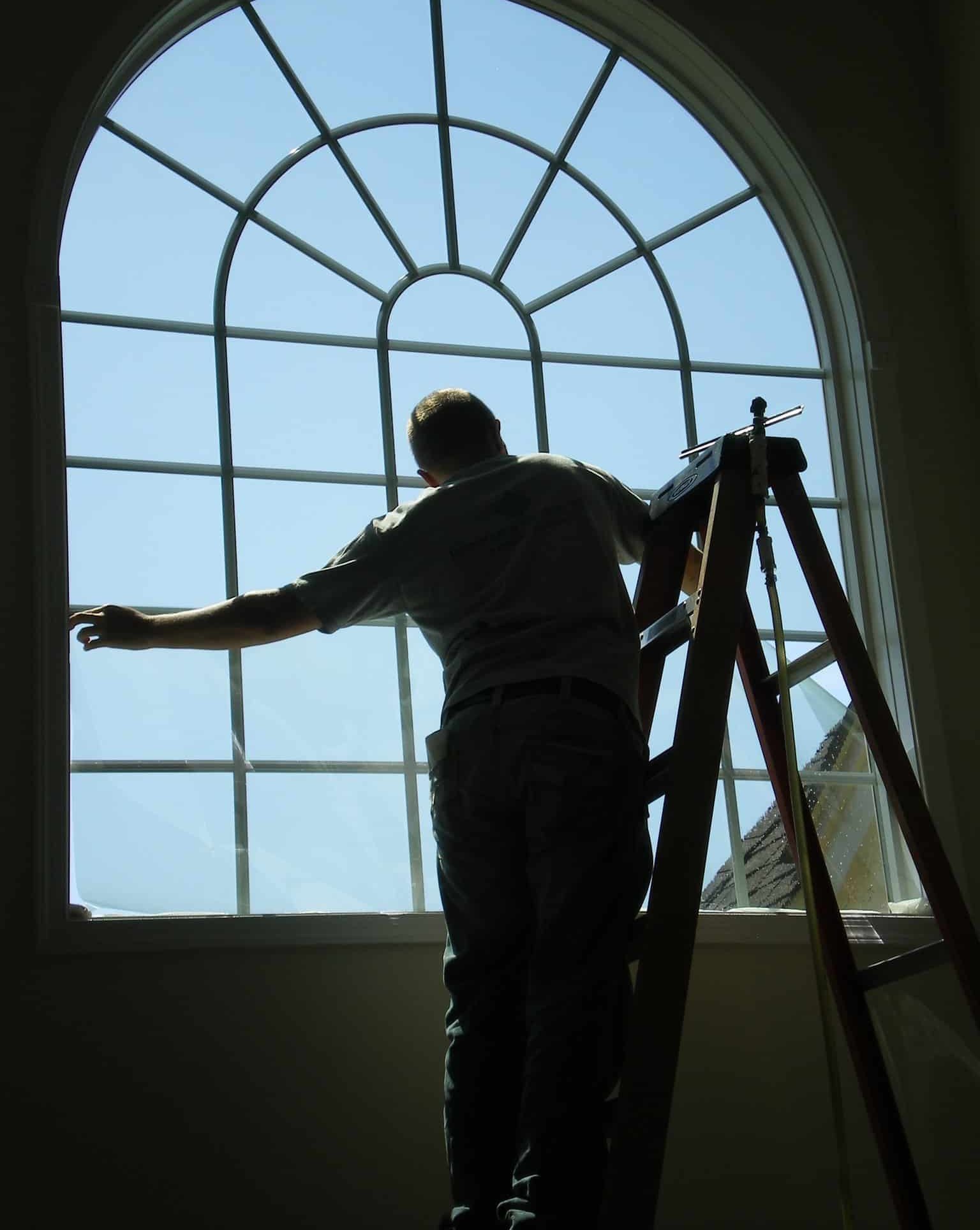
Homeowners gain a clear understanding of which window film type — solar control, Low-E, security, or decorative — best matches their specific comfort,...
It's July. The afternoon sun is hammering the south-facing windows in your living room, and the wall-mounted AC unit is running constantly just to keep the space tolerable. Or maybe it's your Chester County office building, and every afternoon your staff migrates away from the west-side desks because the glare makes screens unreadable. You've looked at replacement windows. You've priced cellular shades. Neither answer felt right, and neither felt like a real fix. Window film is the answer most people in southeastern Pennsylvania land on eventually. The question is which film, installed by whom, and whether it's actually going to do what you need it to do.
This guide covers the full picture: film types, what to expect from the installation process, how UV protection and security film actually work, and what it costs in this region. Everything here is specific to southeastern Pennsylvania homes and commercial buildings, not general advice written for a national audience.
Window film addresses four distinct problems: heat gain, UV damage, security vulnerability, and lack of privacy. Most people come in thinking about one problem and leave understanding they can solve two or three at once with the right film selection. Here's how each application works in practice.
Solar heat control is the most common reason southeastern Pennsylvania homeowners call us. South and west-facing windows in a Main Line colonial or a Chester County farmhouse can push interior temperatures up by 10 degrees or more on a clear July afternoon. Quality solar film rejects a significant portion of incoming solar energy before it converts to heat inside the glass. The room stays cooler, the HVAC runs less, and the second floor becomes livable again.
UV protection is the benefit people underestimate until they see what sun exposure does to a hardwood floor over five years. UV radiation is responsible for the majority of fading in flooring, rugs, upholstered furniture, and artwork. Professionally installed film blocks over 99% of UV rays without meaningfully darkening the space. That's not a marketing claim. That's the measured performance of quality films like those in the Solar Gard lineup.
Security film doesn't make glass unbreakable. What it does is hold shattered panes together so that a broken window doesn't immediately become a point of entry. For a storefront on a commercial corridor in Bucks County or a residential door with sidelights, that delay matters.
Privacy and decorative film rounds out the picture. Frosted or patterned film gives bathroom windows, office partitions, and street-facing sidelights a finished, architectural look while maintaining natural light transmission through the day.
Film selection depends on the specific window, its orientation, and the problem you're solving. A north-facing window in a Doylestown colonial doesn't need the same film as a south-facing floor-to-ceiling window in a Wayne office building. Here's a practical breakdown by use case.
Southeastern Pennsylvania has genuine four-season weather. That matters for film selection. A film that's optimized purely for summer solar rejection may not serve you well when January utility bills arrive. Low-E window films like Solar Gard's Silver AG line reject solar heat in summer while retaining interior heat in winter, reducing both cooling and heating loads across the calendar. For a home in Montgomery County that runs the heat from October through April, this dual-season performance makes Low-E film a more practical choice than a standard solar film.
Basic solar films remain a solid option for spaces where the goal is purely summer heat and glare control, particularly in rooms that aren't used heavily in winter.
Security film works by keeping broken glass bonded to the film layer. When someone breaks a window covered with anti-intrusion security film, the glass shatters but doesn't fall away. The intruder has to work through the film to create an opening. That extra time is often enough to trigger an alarm, attract attention, or simply deter the attempt entirely. We install Solar Gard Armorcoat security film for both residential clients and commercial property owners across the region, from retail storefronts to home doors with adjacent sidelights.
Frosted and patterned decorative films are the most underutilized option in the residential market. They provide daytime privacy from street-level views while still transmitting natural light through the glass. The visual result is indistinguishable from etched or specialty glass at a fraction of the cost, and unlike etched glass, they're removable if your needs change. Bathrooms, home offices with sidelights, and conference room partitions are the most common applications we see.
The two most common mistakes are choosing film by appearance alone and skipping the orientation question entirely. A film that looks right in a showroom photo may not perform correctly on a specific type of glass, and a highly reflective film that works perfectly on a clear suburban residential property may be a problem in a planned community with HOA restrictions.
Pennsylvania has no statewide prohibition on residential or commercial window film. But homeowners in planned communities across the Main Line, Chester County, or new construction developments in Bucks County should review their HOA covenants before selecting a highly reflective film. Some associations restrict exterior reflectivity or specify acceptable tint levels. Historic districts in southeastern Pennsylvania add another layer of consideration, particularly for properties with original wavy glass. The right answer for a historic home isn't a darker film. It's a conservative install protocol with a film that respects the original glass character.
The other thing people get wrong is treating all installers as equivalent. Warranty validity on quality film depends on who installs it. Solar Gard's residential solar and safety films carry a limited lifetime warranty backed by Saint-Gobain, one of the largest building materials manufacturers in the world. That warranty is only honored when the film is installed by an authorized, certified dealer. Sun Control Specialists is an authorized Solar Gard dealer and Panorama PRO certified installer. That certification isn't a marketing label. It's what stands between you and a warranty claim that gets denied because the film was installed incorrectly.
One more thing buyers overlook: the glass itself matters. Certain high-performance films are not recommended for older single-pane glass or specific types of low-E factory-coated insulated units because of thermal stress risk. An on-site evaluation catches these issues before installation, not after.
The fastest way to move forward is to know your problem before you know your product. Walk through each room with a problem and ask yourself: is this a heat issue, a glare issue, a UV issue, a privacy issue, or a security issue? Most rooms have a primary driver, and that answer narrows the film category quickly.
Here are three things you can do right now, before picking up the phone:
After that, the next step is a free on-site estimate. Sun Control Specialists evaluates window dimensions, glass type, orientation, and your specific goals before recommending a film. The Sun Control Specialists Film Studio lets you upload a photo of your own windows and preview how specific Solar Gard films will look on your actual space before you commit, which eliminates the guesswork around appearance.
Southeastern Pennsylvania's climate and building stock create window film problems that generic national advice doesn't account for. The region runs hot and humid from June through September, with UV index levels that surprise homeowners who assume Pennsylvania sun is milder than southern states. It's not mild enough to ignore, and south or west-facing rooms in brick colonials and stone farmhouses absorb and hold heat in ways that newer construction with higher-efficiency windows may not.
The region's housing diversity adds complexity. A 1920s center-hall colonial in Radnor Township has different glass and framing considerations than a 1990s suburban colonial in Horsham or a modern construction home in Kennett Square. Historic properties with original wavy glass need a different installation approach than standard modern double-pane units. The film performance characteristics that are appropriate for each situation aren't the same.
Commercial properties along the Route 30 corridor, King of Prussia, Conshohocken, and the Route 202 business districts face consistent west-facing afternoon glare problems that affect productivity in open-plan offices. Storefronts on dense commercial corridors in Bucks and Delaware Counties have security film needs that suburban residential properties don't share to the same degree.
Sun Control Specialists has been working across this specific geography for over 27 years. The service area covers the Main Line, Bucks County, Chester County, Montgomery County, Delaware County, and selected Philadelphia neighborhoods. That's not a regional generalization. It's the specific places where we've worked on everything from estate glass to retail security installs.
Sun Control Specialists brings 27 years of southeastern Pennsylvania window film experience, Solar Gard authorization, and Panorama PRO certification to every project. That combination means the film you get is a genuine manufacturer product installed to specification, with a warranty that's actually valid.
The film range covers everything a homeowner or commercial property owner in this region needs: standard solar and heat-reduction film, Low-E film for year-round performance, Armorcoat security film for glass that needs forced-entry resistance, and decorative film for privacy and aesthetic applications. A typical residential project covering 10 to 15 windows is completed in a single day, which matters when you're working around a home or a business that can't go dark for multiple days.
The estimation process starts with a site visit, not a phone quote based on square footage alone. Glass type, orientation, existing coatings, and your stated goals all affect what gets recommended. That on-site evaluation is free, and it's how we avoid mismatches between film and glass that create problems after the fact.
If you're in Chester County, Montgomery County, the Main Line, Bucks County, or Delaware County and you've been putting this off, the estimate costs you nothing. Request a free estimate from Sun Control Specialists or call (610) 735-7064.
Here's what matters: Window film is a practical, cost-effective solution for heat gain, UV damage, privacy, and security in southeastern Pennsylvania homes and commercial buildings. The right film depends on your glass type, window orientation, and the specific problem you're solving. Working with an authorized, certified installer like Sun Control Specialists ensures the product performs as specified and the warranty holds.
Your next step: Request a free estimate from Sun Control Specialists or call (610) 735-7064.
Yes, with some caveats. Single-pane glass is generally more compatible with window film than older insulated units with factory low-E coatings, which can create thermal stress issues with certain films. That said, the specific film type matters, and an on-site evaluation is the right way to determine which products are appropriate for older glass in a historic or pre-1980s home. Sun Control Specialists assesses glass type before recommending any film for historic or older residential properties.
Most solar and heat-reduction films cause a modest, barely perceptible reduction in visible light. Films in the neutral and ceramic categories are designed specifically to control heat and UV while maintaining a clear, unobstructed view. Highly reflective films do reduce visible light more noticeably, but they're not the default recommendation for most residential rooms. Your specific film selection drives the visual result, which is why the Film Studio preview tool is useful during the consultation process.
A typical residential project covering 10 to 15 windows is completed in a single day. Larger commercial projects may require multiple days depending on the scope and building access requirements. The installation itself involves thorough window cleaning, precise film cutting, application, and squeegee finishing. After installation, film takes several weeks to fully cure, during which minor haziness or water bubbles may be visible. These resolve on their own as the adhesive bonds to the glass.
This depends on your window manufacturer's warranty terms. Some manufacturers void glass warranties if film is applied without their approval. It's worth reviewing your window warranty documentation before installation. Sun Control Specialists can advise on film selections that minimize thermal stress on insulated glass units, which is the primary concern window manufacturers cite. When in doubt, check your window documentation first.
It can be, but film selection matters. Many HOAs in planned communities across Montgomery County, Chester County, and the Main Line specify acceptable exterior reflectivity levels or restrict visible tint. Lower-reflectivity and neutral-tone films typically meet HOA guidelines while still delivering meaningful heat and UV performance. Sun Control Specialists can review your HOA restrictions and identify film options that work within them. Don't assume a restriction rules out window film entirely before checking what options exist.