
Interactive Tool Try the Film Studio →
Call (610) 735-7064
Get an Instant Estimate
Mon to Fri · 9AM to 5PM
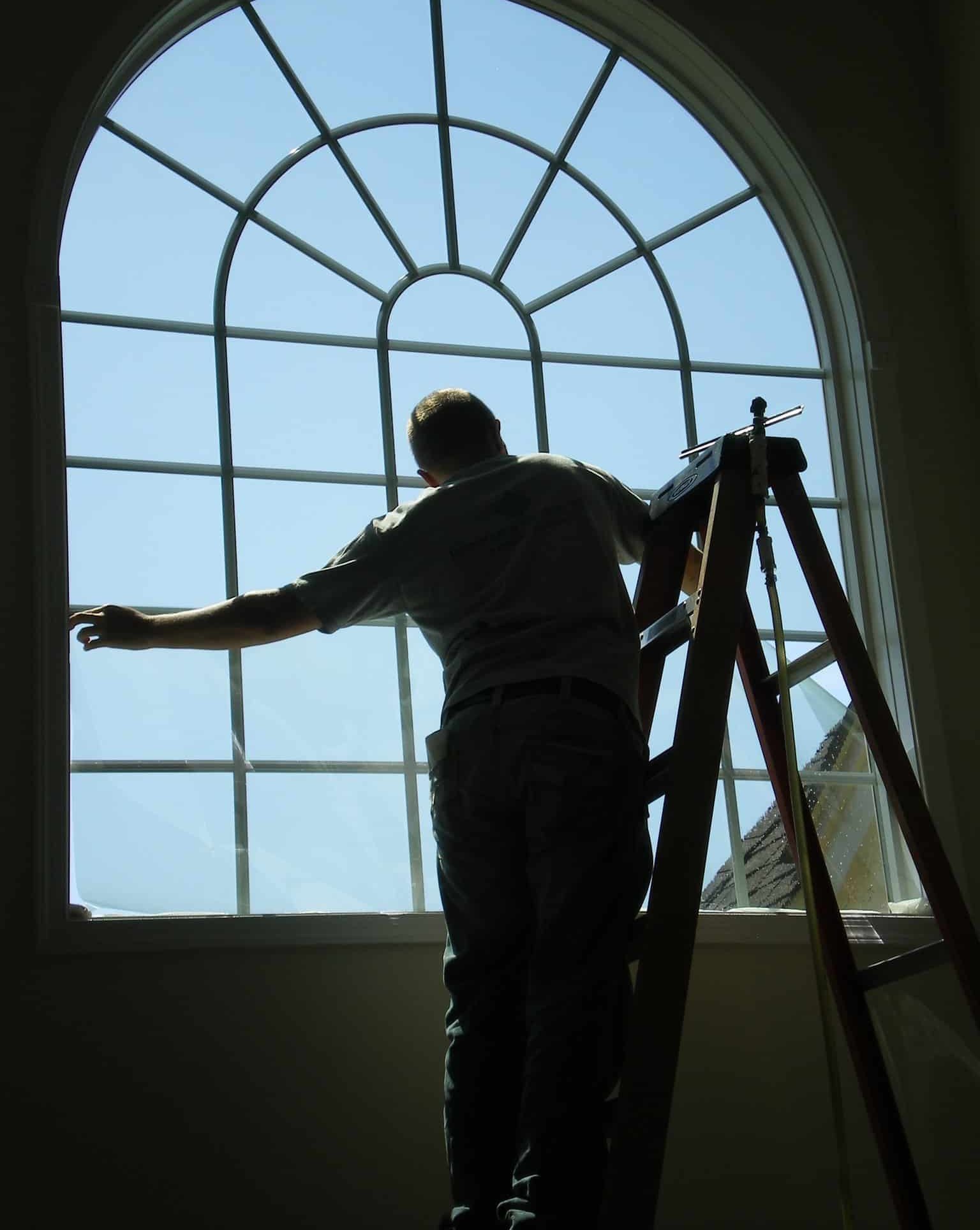
North Wales homeowners gain a clear understanding of which window film type solar, security, or decorative directly addresses their specific comfort,...
It's 3 p.m. on a Tuesday in late June, and the west-facing living room in your North Wales home has become uninhabitable. The air conditioning is running constantly, the cushions on the sofa feel warm to the touch, and the hardwood floor near the window has started showing a distinct band of fading where the afternoon sun hits it every single day. You've got blackout curtains, but pulling them closed means sitting in a dark room in the middle of the afternoon. That's not a solution. It's a concession.
Window film solves problems like this one directly. Not by blocking the view or darkening the room, but by intercepting solar energy at the glass before it ever enters the space. For North Wales homeowners, the question isn't usually whether window film helps. It's which film matches the specific problem: heat, UV damage, privacy, security, or a combination. This guide walks through each category honestly, including what works on older homes, what the installation process actually looks like, and how to get an accurate picture of what it will cost before anyone shows up with tools.
Sun Control Specialists has been installing Solar Gard window film across Montgomery County and the surrounding region for more than 27 years. North Wales is well within our service area, and we work on everything from new construction colonials to 19th-century farmhouses with original wavy glass. Here's what you need to know.
Solar control film reduces the amount of heat entering a room through glass by rejecting solar energy at the window surface, before it converts to heat inside. On west- and south-facing windows, where the heat load in a Pennsylvania summer is highest, the difference is measurable both in comfort and in how hard your cooling system has to work.
North Wales sits in a position where summer afternoon sun hits those west-facing walls hard. Living rooms, home offices, and kitchens with windows on those elevations tend to run five to ten degrees warmer than the rest of the house from roughly 1 p.m. onward. Air conditioning compensates, but it never fully catches up. The room feels stuffy, the system runs long cycles, and anyone working near the window is fighting direct radiant heat that the thermostat can't detect.
Solar Gard films installed by Sun Control Specialists are engineered to reject a significant portion of solar energy while maintaining natural light transmission. Nano Ceramic Hilite, one of the Solar Gard product lines we install frequently, rejects heat without the dark tint that older films required. You keep the view, you keep the daylight, and the room stops feeling like a greenhouse by mid-afternoon.
This isn't a marginal gain. Homeowners who install solar control film on problem windows consistently report that those rooms become usable again in summer without cranking the thermostat down. We can't give you an exact energy savings percentage without knowing your glass, your home's orientation, and your current HVAC setup. What we can tell you is that reducing heat at the source is more effective than cooling a room that's already hot. Window film installation addresses the problem at the point of entry.
UV radiation causes fading and material degradation year-round in Pennsylvania, not just during summer. Quality window film blocks up to 99% of UV radiation, providing permanent passive protection without affecting how the room looks.
Hardwood floors, area rugs, upholstered furniture, artwork, and wood cabinetry near windows are all vulnerable. The damage accumulates slowly, which is part of why homeowners underestimate it. You don't notice the fading on a Tuesday. You notice it eighteen months later when you move a piece of furniture and see the contrast between the exposed floor and the protected section underneath.
Pennsylvania gets meaningful UV exposure in every season. A cold February day with bright sun through a south-facing window delivers UV radiation just as effectively as a July afternoon. Untreated glass blocks some UV, but nowhere near enough to protect interior materials long-term. Low-e glass does better, but it's not complete protection either.
UV-blocking film from Sun Control Specialists acts as a continuous protective layer that requires no maintenance and doesn't affect visible light in any noticeable way. The film sits on the glass and intercepts UV before it reaches your floors and furniture. Unlike window treatments, there's nothing to open or close, nothing to forget, and nothing that creates a visual barrier between you and the room.
If you have original artwork, an antique rug, or hardwood floors in a sunny room, this is the category that deserves immediate attention. The cost of the film is a fraction of what refinishing floors or restoring faded upholstery will run. UV protection window film is one of the most direct investments a homeowner can make to preserve interior materials.
Yes. Sun Control Specialists has direct experience with historic properties in North Wales and across Montgomery County, and there are film options that satisfy preservation requirements without altering the visual character of the original glass.
This is the question we hear most often from owners of older homes in the area, and the concern is legitimate. Some older window films had a highly reflective, mirror-like appearance that preservation boards reject immediately because it changes the exterior character of the building. The same concern applies to HOA communities with aesthetic covenants on window appearance.
The solution is selecting low-reflectance film with neutral color tone. These films perform well on heat and UV rejection while maintaining the look of plain glass from the exterior. When we work on a historic property, we match the film specification to what the glass and the structure can support. Original wavy glass and older single-pane windows require a conservative installation protocol. The film choice, the adhesive system, and the curing process all need to account for the fragility and dimensional irregularity of historic glazing.
When a historic commission or landmark board review is required, Sun Control Specialists can provide documentation supporting the installation. We've been through this process with Montgomery County properties before. It removes a barrier that stops many historic homeowners from even exploring film as an option.
If your home was built before 1940 and you're not sure whether film is appropriate, the right starting point is a site visit. We look at the glass, assess the frame condition, and give you an honest answer about what's possible and what's not. We don't install film where it isn't appropriate. Historic glass needs a conservative install protocol, not just a different product spec.
Security window film holds broken glass together in the frame after impact, slowing forced entry and reducing injury risk from glass fragments. It does not make glass unbreakable, and it shouldn't be marketed as if it does. What it does is buy time, and time is what deters a break-in attempt.
For North Wales homeowners concerned about forced entry through ground-floor windows, sidelights, or entry-adjacent glass panels, security film adds a physical deterrent layer that standard glass doesn't have. When someone attempts to break through a filmed window, the glass may crack or shatter, but the film holds the fragments together. The opening doesn't appear. The intruder has to keep working against a membrane that resists penetration, which takes time and creates noise.
Most opportunistic break-in attempts are abandoned within 60 seconds when they encounter unexpected resistance. Security film applied by Sun Control Specialists to entry-adjacent windows substantially increases the time and effort required for forced entry, which changes the risk calculation for anyone testing the vulnerability.
Storm protection is a related benefit. When a branch or debris strikes filmed glass, the breakage pattern is contained. The glass holds in place rather than fragmenting inward, which matters for injury prevention and for keeping the building envelope intact until repairs can happen.
We install Solar Gard Armorcoat security film on residential properties across Montgomery County. The right thickness depends on the threat being addressed. Entry-point deterrence has different requirements than blast mitigation. We'll walk through the specifics during a site visit. Learn more about anti-intrusion security film options on our services page.
Decorative and privacy films let natural light pass through while blocking direct sightlines into the home. No blackout treatment required, and no permanent glass replacement.
North Wales suburban lots are close. Street-facing windows, bathroom windows, and sidelights next to front doors are common privacy problem areas. The standard workarounds are heavy window treatments or frosted glass replacement, both of which have real drawbacks. Curtains block light when closed and require regular adjustment. Replacing glass is expensive, disruptive, and permanent if your preferences change.
Frosted, etched, and patterned decorative films from Sun Control Specialists deliver the same privacy result without those trade-offs. The film sits on the interior glass surface and diffuses light passing through, eliminating clear sightlines while maintaining brightness in the room. For a bathroom window, a sidelight panel, or a street-facing window in a dining room, the effect is exactly what most homeowners are looking for.
Decorative film is also reversible, which matters in situations where a future buyer might have different preferences or where design plans change. It adheres to the glass surface without damaging it and can be removed or replaced without affecting the window itself.
Pattern options range from simple frosted gradients to etched-glass visual textures. For homeowners who want something more distinctive at a front entry or in a home office with a street view, patterned film gives you a custom look without the cost of specialty glass. See decorative window film options for more on what's available.
You don't need to wait for an installation appointment to start making informed decisions. Here are three concrete steps you can take today.
Choosing the right film starts with understanding what problem you're actually solving, then matching the film's performance characteristics to the glass, the room, and the elevation. There's no universal answer, and anyone who recommends the same film for every window in a house hasn't done the assessment correctly.
West-facing windows with a heat problem need strong solar heat rejection. A north-facing bathroom window with a privacy issue needs a diffusion film, not a tint. A historic sidelight near a front entry needs low reflectance and a careful installation approach. These are different specifications.
Sun Control Specialists offers an interactive Film Studio tool that lets homeowners preview how different Solar Gard films will look on their actual windows before any commitment is made. You upload a photo of your window and test various film options virtually. It's not a perfect simulation, but it eliminates most of the guesswork around appearance and helps narrow the field before a site visit confirms the final specification.
The estimate Sun Control Specialists provides is free, written, and itemized. You see the film type, the window count, the square footage, and the labor broken out by line. That structure lets you prioritize. If the full project is more than the current budget allows, you can phase it, starting with the windows creating the most immediate problem and adding others later. We don't push for all-at-once installations when a phased approach makes more sense for the homeowner.
North Wales sits in a part of southeastern Pennsylvania where the residential mix ranges from new construction subdivisions to 19th-century properties, and window film requirements vary significantly across that range. A generic national recommendation doesn't account for that variation. Local experience does.
The orientation patterns in North Wales neighborhoods put a lot of living space on west and south elevations where afternoon solar gain is most aggressive. Pennsylvania summers have become more intense over the past decade, with more consecutive days above 90 degrees than older HVAC and window specifications were designed to handle. Solar control film addresses that gap directly on the glass, without requiring HVAC upgrades.
Montgomery County also has a meaningful concentration of historic residential properties, some of them subject to local landmark review and some simply older homes with original glass that requires careful handling. Sun Control Specialists works across this range regularly. We know what Montgomery County historic commissions typically require, and we know how to spec film that passes review without sacrificing performance.
For homeowners in HOA communities, low-reflectance film options satisfy the aesthetic guidelines that most covenants enforce, maintaining consistent exterior appearance while delivering full interior performance benefits. Check our service area page to confirm coverage for your specific neighborhood.
Sun Control Specialists has been installing Solar Gard window film in southeastern Pennsylvania for more than 27 years, with specific experience on residential properties across Montgomery County, the Main Line, Bucks County, Chester County, and Delaware County.
We install Solar Gard solar control and UV-blocking films, Armorcoat security film, and decorative privacy films. That range matters because most homes have more than one problem to solve, and working with a single installer who knows the full product line means the specification work gets done correctly the first time.
Our experience with historic properties is genuine, not incidental. We've worked on original glass, coordinated with landmark boards, and provided documentation packages for preservation review. If your home has historic glass or sits in a regulated district, that's not a reason to avoid us. It's a reason to call us first.
Every project starts with a free, no-obligation site assessment and a written estimate that breaks down exactly what you're paying for. There's no pressure to commit at the appointment, and we're straightforward about which films will and won't work for a given situation. If film isn't the right answer for a particular window, we'll tell you. Visit our Solar Gard product page or browse the project gallery to see the work before reaching out.
Here's what matters: North Wales homeowners dealing with heat, UV fading, privacy gaps, or security concerns on residential windows have film solutions available for each of those problems. Sun Control Specialists installs Solar Gard window film on both modern and historic properties across Montgomery County, with 27+ years of local experience, free itemized estimates, and film options that satisfy HOA and historic preservation requirements.
Your next step: Request a free estimate from Sun Control Specialists or call (610) 735-7064.
Modern solar control films, including Solar Gard's Nano Ceramic Hilite line, are designed to reject heat without requiring heavy tint. The visual difference indoors is subtle for most film options. Some homeowners notice a slight reduction in glare, which they typically prefer. If light transmission is a priority for a particular room, we select film specifications that maintain high visible light transmission while still rejecting a meaningful amount of solar heat. The assessment conversation will walk through the trade-offs for each window.
Yes, with the right film specification. Double-pane windows have a specific thermal expansion characteristic, and some high-absorption films can cause seal failure if applied to certain configurations. Solar Gard films installed by Sun Control Specialists are selected with that in mind. During the site assessment, we review the glass type and any manufacturer documentation available to confirm the appropriate film for your specific windows. This is a standard part of our process, not an additional concern for you to manage.
Solar Gard films installed correctly on residential glass typically last well beyond ten years. Longevity depends on film type, glass condition, and installation quality. Solar Gard products available through Sun Control Specialists come with manufacturer warranty coverage, and Panorama PRO products carry the Panorama PremierPlus Warranty. We'll specify the applicable warranty for any film we recommend during the estimate process.
Pennsylvania imposes no state-level restrictions on residential window film. HOA covenants are the most common local constraint, and they typically address exterior reflectivity rather than film use outright. Low-reflectance Solar Gard films satisfy most HOA aesthetic guidelines. For homes in historic districts or subject to landmark review, we provide film specifications and documentation that address preservation board requirements. In the vast majority of cases, there's a compliant film option for any North Wales residential property.
Spring is the optimal window for North Wales homeowners. Film cure times perform well in moderate temperatures, and scheduling before peak summer heat means solar control benefits are active during the highest-demand cooling months. Sun Control Specialists operates year-round, but spring appointment slots fill earlier than most homeowners expect. If you're planning a project for summer comfort, early spring is the time to get the assessment and estimate scheduled so the installation happens before July.