
Interactive Tool Try the Film Studio →
Call (610) 735-7064
Get an Instant Estimate
Mon to Fri · 9AM to 5PM
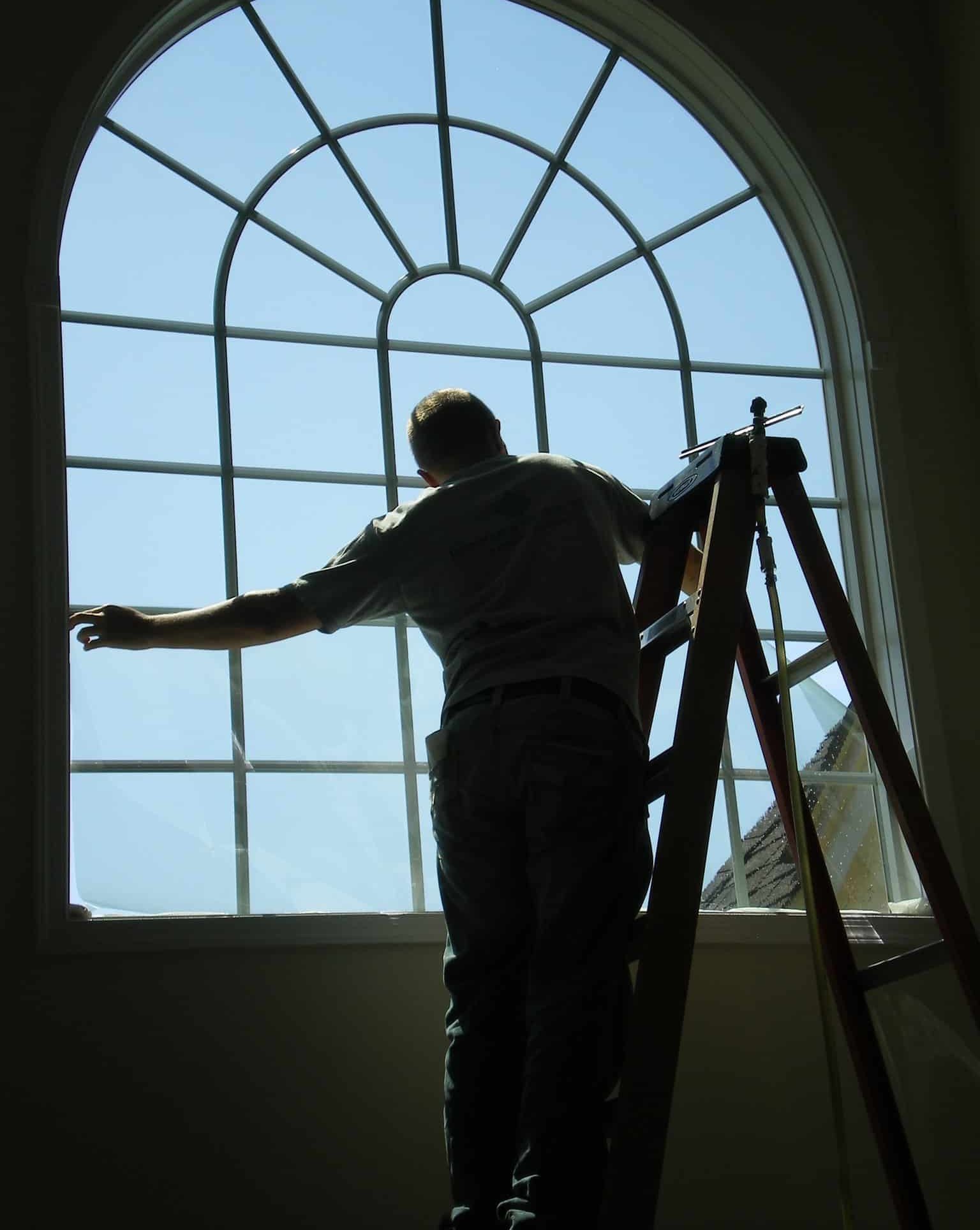
Ground-floor estate glass retrofitted with professional-grade 7-mil to 14-mil security film significantly increases forced-entry resistance time,...
You spent real money on that great room. The floor-to-ceiling glazing looking out over the back acre. The picture window framing the side garden. The paired French doors off the flagstone terrace. It all looks exactly right — until you stand in the driveway at dusk and notice just how much of your ground floor is glass. A lot of it is large, low to grade, and not visible from the street. If you've thought about what it would take someone to get through that glass, you already know the answer isn't reassuring. Standard float glass at that scale breaks in under three seconds. Three seconds is nothing. It's not enough time for an alarm to sound, let alone for anyone to respond.
This is the security reality for estate homes across Chester County, Montgomery County, the Main Line, and Bucks County. The same architectural glass that makes a property distinctive also presents a perimeter that's worth taking seriously. Security window film doesn't make glass unbreakable. What it does is change the math on forced entry in a way that matters practically. At Sun Control Specialists, we've been installing Solar Gard security film on estate-scale glass for over 27 years, and the conversation almost always starts the same way: the homeowner assumed replacing the glass was the only real option. It usually isn't.
Security film doesn't prevent glass from breaking — it prevents glass from becoming an opening. When a pane treated with professional-grade security film takes an impact, the polyester matrix holds the fractured glass together in a web pattern. The intruder isn't stepping through a clean hole. They're pushing against a flexible, clinging barrier that reforms around every strike. That distinction is what makes film effective.
Independent testing puts the numbers in clear terms. Untreated annealed glass at estate scale can be breached in under three seconds. A properly specified security film installation on the same pane can extend that to 60 seconds or more under sustained attack. For opportunistic criminals, that delay is often enough to abort. An alarm has time to sound. A motion light triggers. A neighbor notices. The window that looked like a fast entry point turns into a problem.
For ground-floor estate glass specifically, the geometry matters. Large panes, low sill heights, and limited street visibility are exactly the conditions opportunistic intruders look for. A 60-by-96-inch picture window off a side terrace represents a massive potential opening if the glass fails quickly. The same window treated with heavy-gauge security film holds together under repeated impact, changing what was a three-second breach into a sustained, noisy, visible struggle.
This is what anti-intrusion security film is actually doing mechanically. The film isn't an alarm. It buys time. Time is what everything else needs to work.
For ground-floor estate applications, 7-mil to 14-mil security film is typically the right specification range. The lighter 4-mil safety films used on standard residential windows aren't designed for the attack surface a large estate pane presents. When the potential opening is 40 square feet, the film has to perform across the entire surface under sustained force.
Solar Gard security films in the professional grade carry certifications under ANSI Z97.1 and meet glazing safety standards relevant to occupied residential spaces. The multi-ply construction in heavier films provides tear resistance that lighter films can't match. When an intruder is repeatedly striking and pushing at a treated pane, the film's ability to resist tearing at the point of impact — and across the full pane under flex load — is what keeps the glass contained.
Here's what estate homeowners often don't expect: heavier security films are also available with integrated solar control and UV inhibitors, so you're not choosing between protecting the glass and protecting the interior. A single installation can deliver fragment retention, UV blocking above 99%, and meaningful heat rejection. That matters when the alternative is running the air conditioning at full load through 80 square feet of south-facing glass all summer.
Film selection on estate work isn't one-size-fits-all. Visible light transmission, tint, solar heat rejection coefficient, and security rating all interact. Sun Control Specialists specs film by window orientation, glass type, and what the homeowner actually needs to solve — which on large estate panes is rarely just one thing. See our full window film installation services for more on how that process works.
On large fixed panes and sidelights, a standard wet-glazed film application may not be sufficient on its own. When film is applied directly to glass without edge anchoring, the treated pane retains its fragments on impact — but under sustained lateral force, the whole pane can deflect or push inward as a unit. The film held. The frame didn't. That's the failure mode that gets missed in conversations about security film.
An attachment system changes the equation. It bonds the film edge into the window frame using structural silicone at the perimeter, mechanically tying the glazed assembly together so the frame becomes part of the security barrier. For picture windows and large fixed sidelights — both common on southeastern Pennsylvania estate properties — this is often the right call.
The decision depends on frame construction and substrate. A solid wood or aluminum frame in good condition is a candidate for an anchored install. A deteriorating or undersized frame may need attention first. Sun Control Specialists assesses frame condition and compatibility as a standard part of pre-installation inspection on estate work, because recommending an attachment system on a compromised frame doesn't help anyone.
This is the kind of detail that separates a professional estate installation from a retail film kit applied by a homeowner on a Saturday afternoon. The film itself is only part of the system. The frame, the adhesion approach, and the edge treatment determine whether the assembly performs under real-world load. Don't skip that assessment step.
UV degradation, solar heat gain, and storm fragment hazard are all addressed by the same installation that hardens the glass for security. Estate homeowners with hardwood floors, upholstered furniture, and artwork near large ground-floor windows already know the problem: direct solar exposure through unprotected glass accelerates fading faster than most people expect. UV-A and UV-B together account for roughly 40% of fabric and floor finish fading. Security films with embedded UV inhibitors block above 99% of that radiation.
The mid-Atlantic region also produces weather that can turn large unprotected glass into a genuine hazard. Nor'easters, summer hail storms, and high-wind events all create conditions where an unprotected estate pane that fails doesn't just break — it sprays. Security film retains those fragments regardless of whether the cause was a person or a windborne object. That fragment-retention function is valuable whether or not forced entry is the primary concern.
Solar heat rejection matters too. A ground-floor room with significant west-facing estate glass can become unusable on summer afternoons without meaningful solar control. Security films with low-e or neutral-tint solar coatings reduce total solar energy transmittance, cutting heat gain without requiring a heavy tint that changes the look of the glass. The return on investment calculation for estate glass film includes furniture life, floor refinishing costs, and HVAC load alongside the security upgrade — and when you total those numbers, the case gets significantly stronger.
Three things you can do today, without any professional help, that will make the estimate conversation more productive:
None of this replaces a site inspection. But walking in with this information makes the conversation faster and the recommendation more specific to your actual property.
Chester County, Montgomery County, Delaware County, and the Main Line corridor have a concentration of estate-scale residential properties that's unusual even by regional standards. Large lots, deep setbacks, and substantial ground-floor glazing are common. So is older construction where the original glass isn't tempered, where frames were built for appearance rather than structural security performance, and where retrofitting impact glass would require full sash replacement on historic or custom frames.
The mid-Atlantic climate adds weather exposure that's easy to underestimate. A spring nor'easter with 60-mile-per-hour gusts and wind-driven debris puts real stress on large unprotected panes. Properties in Bucks and Chester counties with south- and southwest-facing estate glass also carry meaningful heat gain loads through the summer months — a problem that only grows worse as large-pane glass becomes more common in high-end residential design.
Security film installation is done on the interior surface of the glass, which means seasonal temperature dependency is lower than exterior applications. A climate-controlled home can receive an installation in January without adhesion compromise, provided the glass surface is above 40°F. Summer installs on heavily solar-loaded panes require morning staging and careful pre-cleaning. Sun Control Specialists manages those variables as part of every estate project. Our service area covers the full southeastern Pennsylvania region, and we're familiar with the construction patterns and glass types common to each county.
Estate glass is not standard residential film work. The pane sizes, the frame conditions, the mix of security, UV, and solar objectives, and the need for attachment-system assessment on fixed glazing all require experience with this specific type of project. Sun Control Specialists has been installing Solar Gard film on southeastern Pennsylvania homes and commercial properties for over 27 years. We've worked on historic estate glass in Chester County where the substrate required a conservative installation protocol and on contemporary Main Line construction with floor-to-ceiling thermally broken frames that needed different handling entirely.
We install Solar Gard and Armorcoat film products, which gives us access to the full range of security ratings, UV performance specs, and solar control options in a single product family. We don't sell you a film spec without first understanding what the glass is doing, what direction it faces, what's behind it, and what you actually need it to accomplish. That pre-installation assessment is part of the job. It's what keeps recommendations specific to your property rather than generic.
If you want to see the range of film options and prior estate work, the project gallery is a useful starting point before a site visit.
Here's what matters: Ground-floor estate glass is a genuine security and storm vulnerability, and security window film is a proven, cost-effective way to address it without replacing existing frames or glazing. The right specification for estate applications runs heavier than standard residential film, often includes an attachment system on large fixed panes, and can simultaneously deliver UV protection and solar heat rejection alongside the security performance. A proper pre-installation inspection is not optional on estate work.
Your next step: Request a free estimate from Sun Control Specialists or call (610) 735-7064.
No, and it shouldn't be positioned that way. Security film and an alarm system do different jobs. Film slows a breach by holding fractured glass together and increasing the effort required to create a passable opening. An alarm detects a breach and triggers a response. The two work together: the film buys the time the alarm needs to function. On large estate glass where a fast smash-and-grab is a realistic threat, having both layers in place is a much stronger position than either one alone.
It depends on the film specified. Heavy-gauge security films are available in virtually clear, neutral tint, and lightly reflective finishes. Many estate installations use films with visible light transmission above 70%, which is difficult to detect from either inside or outside the home. If solar heat rejection is also an objective, a light neutral tint with a low solar heat gain coefficient can address both without creating a dark or mirrored appearance. Sun Control Specialists will show you film samples on your actual glass before installation to confirm the look meets your expectations.
Yes. French doors, sidelights, and floor-to-ceiling glazed panels are all viable substrates. The installation protocol differs slightly for doors because the film needs to account for the door edge and hinge flex, but it's a standard part of estate perimeter work. Sidelights adjacent to entry doors are actually a priority target in forced entry scenarios, making them among the most important panes to treat on any estate property.
Fragment retention is one of the primary benefits during storm events. When a large unprotected pane fails under windborne debris or hail impact, it can spray glass fragments across a wide area, creating a serious injury hazard for occupants. Security film holds fractured glass in the polyester matrix so fragments remain largely contained within the frame rather than becoming projectiles. This performance is not conditional on the cause of the break — the film holds whether the impact source is a person or a 2-inch hailstone.
A ground-floor perimeter with 10 to 15 large panes typically requires one to two full days with a professional installation team, depending on pane size, frame access, and whether attachment systems are included. Interior installation means weather and season have minimal impact on the schedule once a project begins. Sun Control Specialists coordinates installation timing around occupant schedules and can work in stages on occupied estate homes where clearing large rooms entirely isn't practical.