
Interactive Tool Try the Film Studio →
Call (610) 735-7064
Get an Instant Estimate
Mon to Fri · 9AM to 5PM
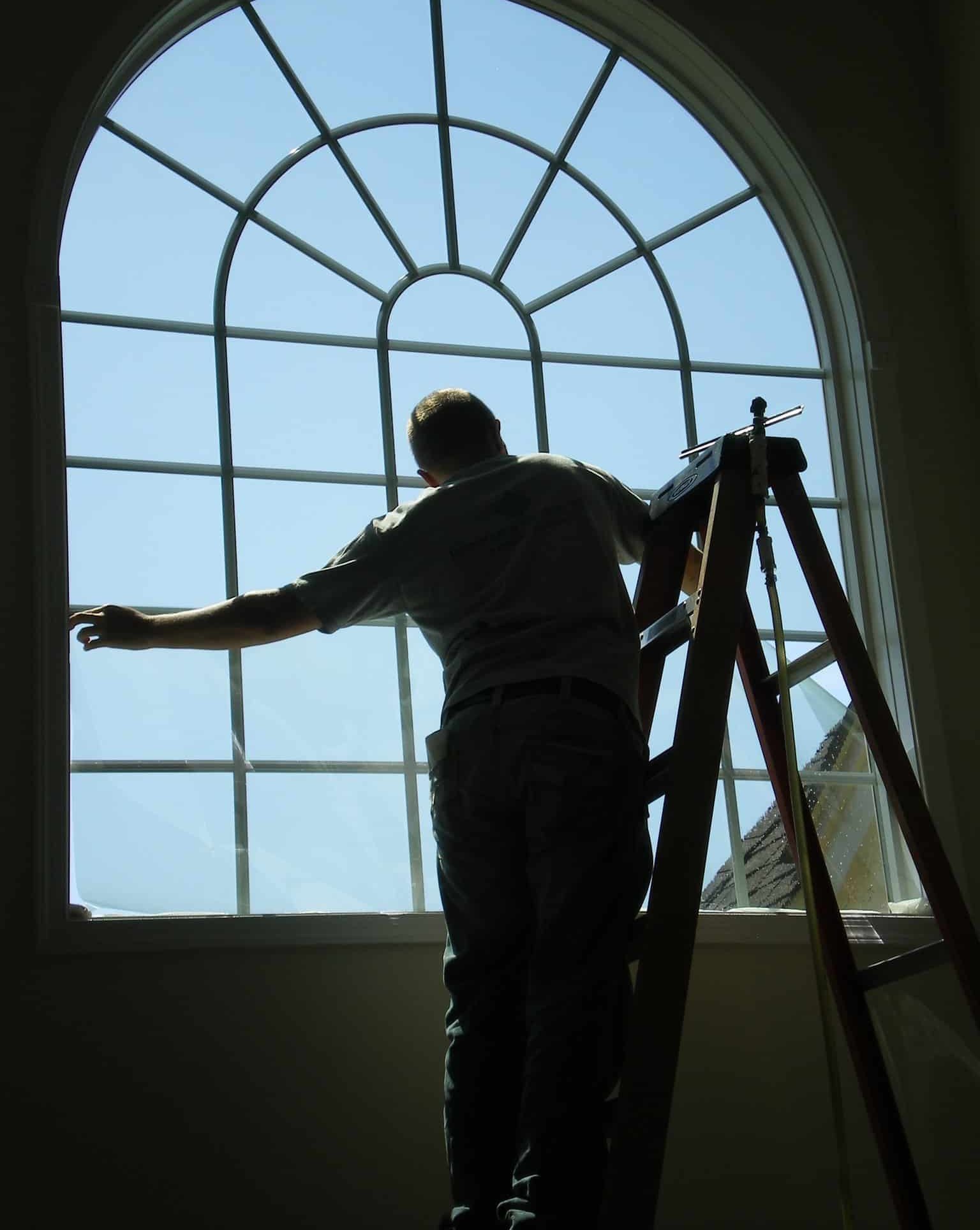
Hardwood floors retain their original stain color and finish consistency across the entire surface, avoiding the high cost of spot refinishing or...
You refinished those floors six years ago. Gorgeous white oak, wide planks, the kind that makes the whole room. Now there's a rectangle of lighter wood running along the south wall where the afternoon light hits hardest, and the rest of the floor still looks like the day it was done. The contrast line is subtle enough that visitors don't notice it right away, but you see it every time you walk in. The oil painting your mother left you hangs on the opposite wall, and you've started to wonder whether the colors were always that flat, or whether something has been happening slowly, the kind of damage you only notice once it's already done.
This is a common situation in southeastern Pennsylvania homes, particularly in Chester County and Montgomery County where deep-lot properties have rooms loaded with south and west-facing glass. The sun that makes those rooms feel alive is also the reason your floors are developing contrast lines and your artwork is losing its depth. UV radiation is doing most of the work, quietly, year-round, even on overcast days.
Window film doesn't change the look of the room. It changes what that light does when it gets inside. Here's what homeowners in this region need to know before the damage gets ahead of them.
UV radiation is responsible for roughly 40% of total interior fading damage, making it the dominant cause of photochemical degradation in wood finishes, pigments, and textile dyes. Visible light contributes another 25%, and heat-related infrared accounts for a similar share, but UV is where the most destructive energy concentrates. Understanding that split matters because it tells you exactly what to prioritize in a film specification.
Hardwood floors fade in predictable zone patterns. The discoloration appears first in rectangular areas where direct sunlight falls consistently, and those zones shift slightly with the season as sun angles change. Over time, the contrast between the exposed and protected areas becomes impossible to ignore and genuinely difficult to correct without a full refinish. Once the floor has faded unevenly, window film can slow additional damage but it cannot reverse the existing discoloration. That's a point worth sitting with before deciding to wait.
In southeastern Pennsylvania, south-facing rooms carry the heaviest cumulative UV load between late spring and early fall. But winter sun angles are actually lower and more penetrating, driving UV deeper into rooms than summer light does, reaching floors and walls that are farther from the window. Homeowners who notice summer fading and tell themselves they'll deal with it next year often miss the winter exposure cycle that's affecting the artwork on the interior wall opposite the window.
UV penetrates cloud cover. A gray November day in Bucks County is still delivering UV to your floors and your framed prints. There's no off-season for this kind of damage.
High-performance window films can reject 99% or more of UV radiation across both UVA and UVB spectrums without requiring a dark or reflective tint. That's the specification that matters for floor and artwork protection, and it's achievable with films that are optically clear or only lightly tinted. You don't have to sacrifice the bright, open look of the room to get meaningful UV protection.
The distinction between UV rejection and visible light reduction is one that trips up a lot of homeowners. Darker films reduce visible light, which can feel like they're doing more work. But UV rejection is a separate performance layer built into the film's construction. A clear or near-clear film with a proper UV-blocking layer outperforms a darker film that lacks one. The UV-blocking layer is embedded in the film's construction, not a surface coating, so it doesn't degrade with cleaning over time.
Solar Gard residential films installed by Sun Control Specialists are specified to this standard. The Nano Ceramic Hilite line, for example, delivers exceptional UV rejection while maintaining high visible light transmission, which is the right combination for homeowners who want protection without darkening their interiors. For spaces where both heat control and UV protection matter, options in the Solar Gard line address both simultaneously without requiring a heavily tinted appearance.
The practical question to ask when evaluating any film is not "how dark is it" but "what is the UV rejection percentage at both UVA and UVB wavelengths." A good installer will answer that question with a product spec sheet, not a color swatch.
Works on paper, watercolors, limited-edition prints, and color photography are among the most UV-sensitive items in any home and can show measurable fading within one to three years of unprotected window exposure. Oil paintings on canvas are more resistant but still vulnerable to UV-induced paint layer embrittlement and varnish yellowing over time. The deterioration is cumulative and non-reversible.
Museum conservation standards set UV levels below 75 microwatts per lumen for sensitive works. Most untreated residential windows in southeastern Pennsylvania allow UV transmission far above that threshold. Solar Gard films bring residential interiors into a comparable protective range, which matters a great deal if you're housing inherited artwork, a photography collection, or antique textiles that have no replacement value.
One thing homeowners often miss: artwork hung on interior walls opposite windows is not automatically safe. Low winter sun angles drive UV deep into rooms, and reflected UV from light-colored walls and floors reaches pieces that never see direct sunlight. The exposure map in your home is more complex than "direct sun versus shade."
Upholstered furniture, custom area rugs, and draperies face the same photochemical degradation from UV, with color shift and fiber weakening happening faster than most people expect. A room that feels protected because the furniture isn't in the direct sun beam can still be accumulating significant UV damage from scattered and diffuse light through untreated glass.
These are the three questions that slow down more buying decisions than price does. They're worth addressing directly.
Appearance: properly specified and installed window film on clear residential glass is nearly invisible at normal viewing distances. The films used most often for UV protection without significant tinting have visible light transmission ratings in the 70-90% range, which is close to the performance of the original glass. Visitors to your home are not going to notice it. You may notice a slight reduction in glare, which most people consider an improvement.
Insulated glass unit warranty concerns are legitimate. Some IGU manufacturers include clauses that reference film installation, and it's worth checking your window documentation. The short answer is that solar films installed on single-pane glass carry essentially no thermal stress risk. For insulated glass units, film should be installed on the interior surface only, and film selection should account for the glass type and solar heat gain characteristics of the unit. Sun Control Specialists assesses the glass type before specifying a film, which is how you avoid a thermal stress situation entirely.
Solar Gard residential films carry a limited lifetime warranty backed by Saint-Gobain, one of the world's largest glass and surface materials manufacturers. That backing means warranty claims are supported by a multinational manufacturing entity, not a regional distributor. For homeowners making a protection decision around irreplaceable floors or inherited artwork, that durability assurance is a real part of the value calculation, not just marketing language.
Before you call anyone, do these three things in your own home.
Southeastern Pennsylvania isn't Phoenix. The UV load here is not extreme by national standards, but it's consistent, it's year-round, and the housing stock amplifies the problem. The Main Line, Chester County, and Montgomery County are full of homes built in the mid-twentieth century with large fixed-pane windows, floor-to-ceiling glass in renovated spaces, and open floor plans that funnel light across wide expanses of hardwood. These are beautiful rooms, but they're UV exposure machines.
South-facing rooms in southeastern Pennsylvania receive concentrated UV load from late spring through early fall, then shift to deep winter penetration as sun angles drop. There's no month where UV damage stops accumulating. Bucks County homes with long east-west orientations often have entire wings that see continuous south and west exposure. Delaware County rowhouses and twins with converted rear additions frequently have south-facing glass that was added without considering cumulative UV impact.
Historic homes on the Main Line and in Chester County present a specific complication: original single-pane glass, plaster walls, antique floors, and art collections assembled over generations. Protecting that interior is not a generic tinting decision. It requires a film selection and installation approach that accounts for the glass type, the thermal characteristics of the original frame, and the visual sensitivity of the space. That's the kind of work Sun Control Specialists has been doing in this region for over 27 years. See the full service area coverage for the counties and communities we work in regularly.
Sun Control Specialists has installed Solar Gard window film across southeastern Pennsylvania since 1996. That's not a generic claim. It means the crew arriving at your house has seen original single-pane glass in 1920s Main Line stone homes, large-format IGUs in new Chester County construction, and everything between. Film selection for UV protection is not one-size-fits-all, and the right product depends on the glass, the room's orientation, and what you're trying to protect.
The company installs Solar Gard residential, commercial, security, and decorative film, with Armorcoat security film available for properties that need both UV protection and glass retention capability. The window film installation process includes a pre-installation site assessment, glass type verification, and product specification before any film is ordered. That step protects your warranty and ensures the film is matched to the actual conditions, not just the most popular option.
For homeowners weighing UV protection against other priorities like heat control, glare, or privacy, the Solar Gard product line has options that address multiple performance needs with a single installation. Contact Sun Control Specialists at (610) 735-7064 or request a free estimate online to discuss what your specific rooms and glass actually need.
Here's what matters: UV radiation is the primary driver of hardwood floor fading, artwork deterioration, and textile degradation in southeastern Pennsylvania homes, and high-performance window film blocks up to 99% of UV without darkening your interior or changing the look of your windows. Waiting until damage is visible means paying to refinish, replace, or restore, and that cost typically exceeds what film installation would have cost. The protection case is straightforward and the economics are clear.
Your next step: Request a free estimate from Sun Control Specialists or call (610) 735-7064.
Window film can't stop fading entirely because UV is only one part of the equation. Visible light and heat also contribute. But since UV accounts for roughly 40% of total fading damage and high-performance films reject 99% of UV, you're eliminating the single largest cause. The practical result in rooms with properly installed Solar Gard film is dramatically slower and more even fading over time. The contrast-line problem, where sunlit zones fade at a different rate than protected areas, is essentially eliminated when film is installed before fading begins.
Yes, with the right film and installation approach. Original single-pane glass in historic southeastern Pennsylvania homes is actually a good candidate for film because there's no IGU warranty to consider and no thermal stress risk from the film trapping heat between panes. The main considerations are selecting a film with low solar heat gain coefficient modification to avoid thermal expansion issues in older frames, and ensuring installation is done by someone with experience on original glass. Sun Control Specialists has extensive experience with historic glass installations across Chester County and the Main Line.
For UV-priority applications, no significant darkening is necessary. Films like the Nano Ceramic Hilite maintain high visible light transmission while delivering full UV rejection. From inside, the room looks essentially the same. From outside, there may be a slight change in reflectivity, but it's subtle and generally not noticeable on residential glass. If you want a demonstration, Sun Control Specialists can show you product samples in person before you commit.
The UV-blocking layer is embedded in the film's construction, not applied as a surface coating. It doesn't wash off or degrade with normal cleaning. Solar Gard residential films carry a limited lifetime warranty backed by Saint-Gobain, covering performance degradation including UV rejection. Proper installation on clean, prepared glass is what determines long-term performance more than anything else, which is why professional installation matters for this application.
This depends on the window manufacturer's warranty language, and it's a question worth checking before installation. For interior-surface film installation, which is the standard approach, the thermal stress risk to the IGU is low when the film is properly specified for the glass type. Sun Control Specialists assesses glass type and solar characteristics before selecting a film, which is the correct protocol for IGU applications. If your windows are still under manufacturer warranty, that documentation is worth having on hand when you schedule the estimate. Learn more about the installation process and what the pre-install assessment covers.