
Interactive Tool Try the Film Studio →
Call (610) 735-7064
Get an Instant Estimate
Mon to Fri · 9AM to 5PM
Homeowners arrive at their consultation with Sun Control Specialists already understanding the four-stage process, realistic cost range, and curing...
You've been sitting in your living room all summer watching the afternoon sun pour across the hardwood floors, fading the rug and turning the west-facing family room into an oven. You've looked up window film a dozen times. You've gotten one quote that seemed too low and another that seemed too high. You're not sure whether your HOA has rules about visible tint, whether film will actually stick in February, or what happens if a bubble shows up three weeks after the installer leaves. These are the right questions, and they deserve straight answers. Here's what professional window film installation actually looks like in southeastern Pennsylvania, from the first phone call through the day the film is fully cured.
Professional window film installation follows four distinct stages, and most homeowners underestimate how much preparation the glass itself requires before a single inch of film goes up. The work is methodical, not quick, and the results depend almost entirely on what happens before the film is ever unrolled.
The process starts with a window assessment. A qualified installer looks at the glass type, the existing seals, the frame condition, and the orientation. South- and west-facing windows in Pennsylvania take the most direct heat load and often have different film requirements than north-facing glass in the same house. That assessment shapes which film gets specified and how it gets applied.
Glass cleaning comes next. This is where the job either goes well or doesn't. Any contamination on the glass surface will show up under the film, so the cleaning protocol matters as much as anything else. Expect a thorough clean using appropriate solutions, followed by inspection before application begins.
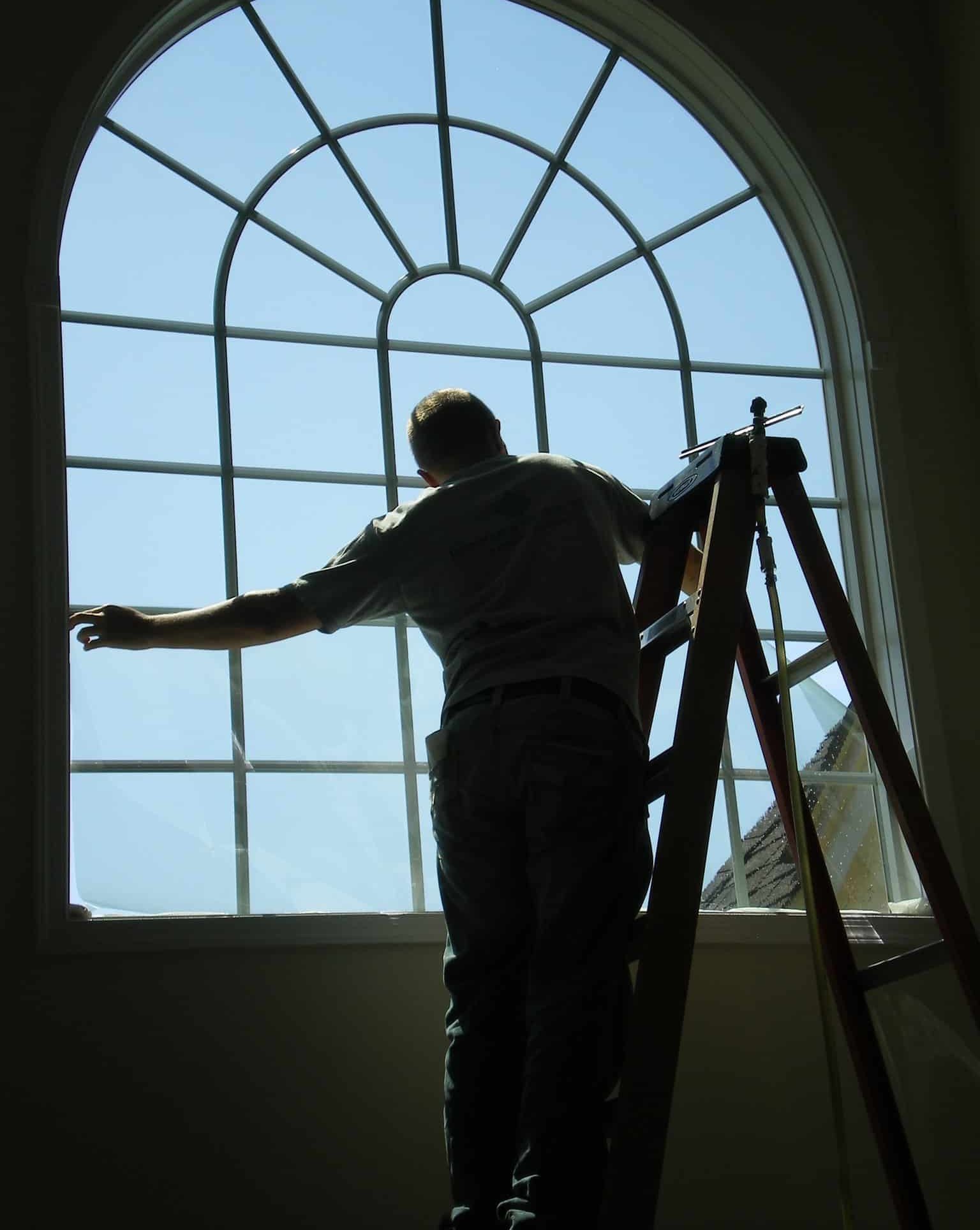
Film application is precision work. The installer wets the glass, positions the film, and uses specialized squeegees to push out water and air. A bubble-free finish requires the right film type, the right technique, and a controlled working environment. Rushing this stage creates problems that can't be fixed without removing the film entirely.
Curing takes time, and in Pennsylvania's climate, that means anywhere from a few days to several weeks depending on temperature and humidity at the time of installation. During curing, small water pockets under the film are normal and will dry out completely. Many homeowners call them defects. They're not.
Residential window film in southeastern Pennsylvania is priced per square foot installed, and the range is wide enough that two legitimate quotes for the same house can look very different depending on film type and project scope. Understanding what drives cost keeps you from making decisions based on price alone.
Film type is the primary cost driver. A basic solar film for heat and glare reduction sits at a different price point than a multi-layer ceramic film, and security or safety film adds still more. Decorative and privacy films vary based on pattern complexity and coverage area. When you're comparing quotes, make sure you know what film type each quote is actually for.
Window count, size, and access complexity all affect labor. A typical Main Line colonial with 10 to 15 double-hung windows is a straightforward day's work. A Chester County farmhouse with large custom windows, deep sills, or second-floor sidelights takes longer and costs more. That's not padding, it's real labor time.
Sticker shock usually comes from not accounting for square footage. A 4-foot by 5-foot window is 20 square feet. A home with 12 windows of that size has 240 square feet of glass to cover. Multiply that across film types and labor, and the total makes more sense once you see the actual glass area involved. Sun Control Specialists can walk you through a window-by-window breakdown during a free consultation so there are no surprises when the quote arrives.
Be skeptical of unusually low bids. A quote that seems too good usually means a film grade that won't perform, an uncertified installer, or no warranty backing. The cost of fixing a failed installation exceeds the cost of doing it right the first time.
Pennsylvania's seasons create real variables that affect both the application and the curing process, and any installer who doesn't account for them is either inexperienced or not paying attention.
Spring and fall are the most favorable windows for installation. Mild temperatures, moderate humidity, and consistent conditions give the adhesive the best environment to bond and the film the best environment to cure evenly. If you have flexibility in scheduling, those months are the practical choice.
Winter installations are possible with adjusted technique. Cold glass slows the curing timeline, meaning those small water pockets under the film stay visible longer, sometimes two to four weeks instead of three to seven days. Experienced installers adjust their application solution mix for cold conditions and set accurate expectations with homeowners about what the curing period looks like in January versus May. An inexperienced installer won't know to make that adjustment, and you'll end up with a call about "bubbles" that didn't need to happen.
Summer installations create a different challenge. Direct sunlight on glass during application can dry the adhesive faster than it should, creating surface imperfections before the film is fully squeegeed. This is manageable, but it requires awareness and timing. Skilled installers work around direct sun exposure during the application stage.
High humidity is the trickiest variable. It can extend cure time and, in extreme cases, affect adhesion quality. A professional who has been working in southeastern Pennsylvania for decades knows what July in Chester County actually feels like on glass, and they schedule and prepare accordingly.
Standard residential window film installation in southeastern Pennsylvania requires no municipal permits. You don't need to file anything with the township or get a building inspection. But that doesn't mean there are no restrictions to check before you schedule.
Homeowners in HOA-governed communities should review their appearance covenants before selecting a film. Some associations have rules about visible reflectivity, tint levels, or film visible from the street. These rules vary widely. A community in Montgomery County might have no restrictions at all, while a planned community in Chester County might specify that window alterations need board approval. Check your governing documents or ask your management company directly.
Historic districts require more careful attention. Older boroughs in Chester County, Delaware County, and parts of Philadelphia's older neighborhoods may have guidelines under local historic commissions that affect what's visible on the exterior of the home. The concern is typically reflectivity or a visible color shift on original glass. The good news is that there are film options designed specifically for historic applications. Lighter, low-reflectivity films can address heat and UV protection without creating an appearance the commission would flag.
Sun Control Specialists has experience working with homes subject to historic guidelines across the region. The answer isn't always to skip film. It's to select the right film and document the install correctly. If you're in a regulated area, mention it upfront during your consultation so the right film gets specified from the start.
A quick action you can take today: pull out your HOA documents or search your community name plus "architectural guidelines" and check the window section before you do anything else. It takes 10 minutes and saves a potential headache later.
Manufacturer certification and a backed warranty are the two clearest signals separating a professional installer from a general handyman who also happens to apply film. Anyone can buy film off a supply site and put it on glass. Not anyone can hold authorized dealer status, carry factory-backed warranty coverage, and show a consistent installation record across hundreds of regional jobs.
Sun Control Specialists is an authorized Solar Gard dealer and a Panorama PRO certified installer. That certification means the product gets installed to manufacturer standards, and it's what makes the Panorama PremierPlus Warranty valid. That warranty is backed by Saint-Gobain, one of the world's largest glass and building materials manufacturers. An uncertified installer applying the same film can't offer that coverage, even if they're using the same brand.
Review volume tied to a specific region matters more than a handful of five-star reviews from anywhere. A 4.9-star rating across hundreds of combined reviews reflects consistent results across different home types, glass conditions, and seasonal installation scenarios specific to southeastern Pennsylvania. That's not a marketing number. That's a pattern.
Here are two practical steps you can take today when evaluating any installer:
You can learn more about Sun Control Specialists' window film installation services or review the Solar Gard product line at the Solar Gard page.
Southeastern Pennsylvania's housing stock creates a specific set of installation challenges that generic advice doesn't address. The region has a mix of 1920s stone colonials on the Main Line, post-war brick ranchers in Delaware County, newer construction in central Bucks County, and historic properties in Chester County boroughs that date back two centuries. Those different building eras mean different glass types, different frame conditions, and different thermal exposure patterns.
Pennsylvania's solar angle and seasonal variation are different from, say, Florida's year-round sun load. The heat problem here is directional and seasonal, which means film selection needs to account for both peak summer conditions and the fact that winter light is still UV-active even when it doesn't feel warm. Fading on floors and fabrics doesn't require July heat. It just requires UV, and UV comes through clear glass in November too.
The Main Line and Chester County markets also have a high concentration of homes with original or specialty glass, including leaded, decorative, and period-correct single-pane windows that require a conservative installation protocol, not just a standard film spec. The wrong film on original glass can cause thermal stress that cracks or clouds it. That's not a recoverable mistake.
Sun Control Specialists serves homeowners across the Main Line, Bucks County, Chester County, Montgomery County and Delaware County. You can check specific coverage at the service area page. Local installer knowledge, in this region, is not a soft credential. It's a functional one.
Sun Control Specialists has been installing window film across southeastern Pennsylvania for more than 27 years. That's not a number chosen for effect. It means they've worked on the full range of regional housing stock, through every seasonal variable Pennsylvania delivers, across residential jobs that range from a single problem room to whole-home installations on historic estates.
The product line is Solar Gard and Armorcoat, covering solar, security and decorative window film applications. The Panorama PRO certification means installations qualify for the Panorama PremierPlus Warranty backed by Saint-Gobain. For homeowners who have dealt with an uncertified installer's warranty disappearing with the company, that distinction is material.
For security-specific needs, the anti-intrusion security film capability means they're not a solar-only shop. Security film keeps broken glass in the frame, buying time and reducing injury risk in forced-entry and impact scenarios. That's a different product and a different installation standard than standard solar film.
If you want a professional assessment of your windows before you commit to anything, call (610) 735-7064 or request a free estimate online. The consultation is free. The clarity it provides is worth the call.
Here's what matters: Professional window film installation in southeastern Pennsylvania is a structured process with real variables tied to glass type, season, building history, and installer certification. Knowing what to expect, what to budget, and how to screen for a qualified installer puts you in control of the outcome before anyone shows up at your door.
Your next step: Request a free estimate from Sun Control Specialists or call (610) 735-7064.
A home with 10 to 15 standard windows typically takes one full day to install. Larger homes, windows with difficult access, or projects combining multiple film types may take two days. Curing, which is separate from installation, takes several days to a few weeks depending on temperature and humidity at the time of install.
A professional installation done with the correct film for your glass type should not damage seals or frames. The risk comes from applying film that's incompatible with a specific glass type, particularly with insulated glass units that have low-e coatings or with original single-pane historic glass. That's why the pre-installation glass assessment matters. Sun Control Specialists identifies glass type before specifying any film.
Yes, with adjusted technique and realistic expectations about curing time. Cold glass slows the adhesive bond, so the visible water pockets that appear during curing take longer to dissipate in January than in May. An experienced installer adjusts the application solution and tells you upfront what the curing window looks like in cold conditions.
You need to be available at the start to let the installer in and confirm which windows are being done. Beyond that, you don't need to stand in the room. The installer works through the house systematically. Most homeowners are able to work from home or manage normal household activity during the install without any interference.
Start by reviewing your HOA's architectural guidelines or your historic district's standards for windows and exterior appearance. The main concern is usually visible reflectivity or color shift on the glass. If your community has restrictions, mention that upfront during your consultation. There are lower-reflectivity film options that meet most appearance standards while still delivering heat and UV protection.