
Interactive Tool Try the Film Studio →
Call (610) 735-7064
Get an Instant Estimate
Mon to Fri · 9AM to 5PM
Homeowners will understand the actual cost drivers behind window film pricing in southeastern Pennsylvania and be equipped to evaluate installer quotes...
You searched "window tinting cost" last week, got back a range so wide it was essentially useless, and now you're not sure if the quote sitting in your inbox is reasonable or if you're about to overpay by a significant margin. That's a common place to land. Homeowners across Chester County, Montgomery County, Bucks County and Delaware County deal with this every season. The generic pricing guides online are written for a national audience and don't account for the older housing stock here, the mix of single-pane and specialty glass in Victorian and colonial-era homes, or what Pennsylvania's freeze-thaw cycle does to a poorly installed film over three winters. This article won't give you a magic number, because the right number depends on your glass, your home, and the problem you're actually trying to solve. What it will give you is a clear framework for evaluating quotes, understanding which film type justifies a price premium, and knowing what questions to ask before you sign anything.
Most southeastern Pennsylvania homeowners should budget between $5 and $20 per square foot installed, with total project costs typically ranging from a few hundred dollars for a targeted single-room application to nearly a thousand dollars or more for a broader scope. That range covers materials and professional labor. Entry-level non-reflective films sit toward the lower end. Premium ceramic and security films push toward the higher end, and for good reason.
That spread exists because "window film" covers a lot of territory. A basic solar film and an Armorcoat security film are both window films in the same way that a bicycle and a truck are both vehicles. They don't cost the same and they don't do the same job.
A few quick actions you can take right now before calling anyone:
Sun Control Specialists can give you accurate per-window estimates based on actual site conditions. Phone estimates built on general averages don't hold up once an installer sees a 1920s double-hung wood frame with non-standard glass dimensions.
The choice between non-reflective, metalized, ceramic, security, and decorative film is the single largest factor in your final cost beyond raw window square footage. Understanding what each category delivers makes the price difference make sense rather than look arbitrary.
Non-reflective solar film is the entry-level category. It handles basic heat and glare reduction at a lower price point. For a north-facing room with modest sun exposure, it can be the right call. For a south or west wall getting three to five hours of direct afternoon sun in July, it's likely to underperform.
Metalized film delivers stronger heat rejection through a thin metallic layer. It works well but carries a reflective appearance that some HOAs in Chester County and the Main Line restrict. Worth confirming before installation.
Ceramic film is where the performance-to-appearance equation changes significantly. Products like the Solar Gard Nano Ceramic Hilite line reject substantial solar heat and block nearly all UV without the reflective look. The price is higher. The performance justification is real, particularly for rooms with significant heat load or homes where furniture, artwork, and flooring represent meaningful replacement costs if UV damage accumulates.
Security film is a separate category entirely. Armorcoat security film doesn't primarily address heat or glare. It holds broken glass in the frame, slowing forced entry and reducing injury risk from accidental breakage. It carries its own pricing logic. You can read more about how it works on our anti-intrusion security film page.
Decorative film pricing varies by pattern complexity, opacity level, and total coverage area. It's not priced the same as solar film and shouldn't be compared on a per-square-foot basis without accounting for those variables.
Southeastern Pennsylvania has a demanding seasonal climate. Hot, humid summers and genuinely cold winters mean a film that only solves one problem will underdeliver on the cost justification you're counting on. This is where a lot of homeowners make a mistake: they buy on price, get a film that performs reasonably well in August, and then realize it did nothing for passive heat retention in January.
The Solar Gard product line carried by Sun Control Specialists is engineered for dual-season demand. Films that reduce solar heat gain during summer while supporting passive heat retention in winter improve the real-world return on investment calculation. A film that only addresses cooling load is a partial solution in this climate.
UV protection deserves its own mention here. Pennsylvania gets enough annual UV exposure to cause measurable damage to hardwood floors, upholstery, artwork, and window treatments within a few years. High-quality ceramic film blocks nearly all UV year-round, not just during peak summer. That protection applies in February as much as in July. UV-blocking window film is one of the more straightforward return-on-investment cases in residential film because the alternative, refinishing floors or replacing furniture, has a known cost.
If you want to get a realistic sense of your heat load before calling anyone, spend a few minutes in each room on a clear afternoon and note which rooms feel noticeably warmer than the rest of the house. That's your starting point for prioritizing which windows matter most.
Southeastern Pennsylvania has a significant share of older housing stock, and that matters for pricing in ways that a national cost calculator won't tell you. Double-hung wood frames, leaded glass accents, transoms, arched windows, and non-standard dimensions are common in Victorian, colonial, and early 20th-century homes across the Main Line, Chestnut Hill, and older boroughs throughout the region.
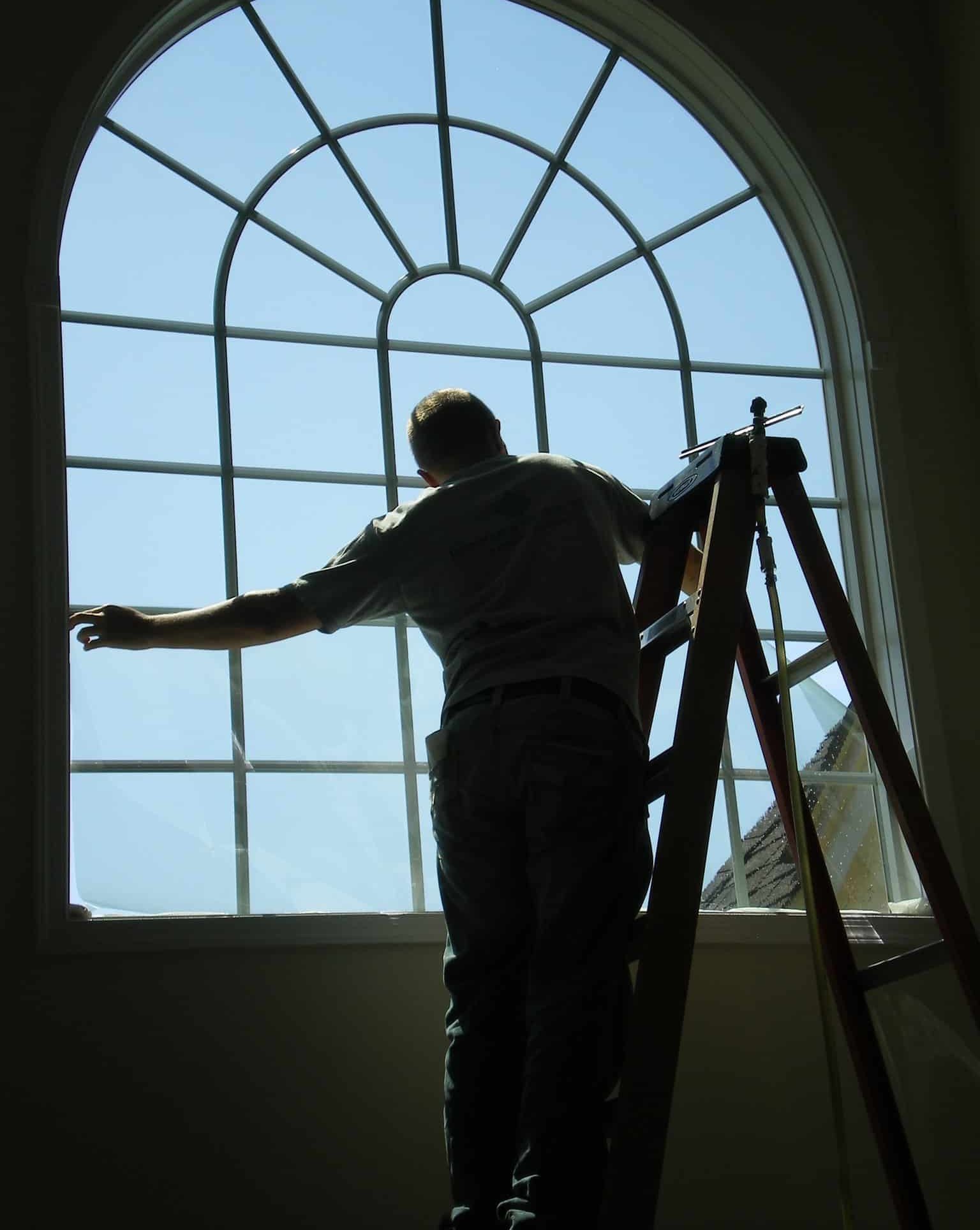
These variables add labor time. A second or third-floor window that requires staging or ladder access costs more to film than a ground-floor slider. A window with existing factory coatings may require a different film specification to avoid thermal stress cracking. A leaded glass panel needs a conservative install protocol, not just any film in stock.
This is why phone estimates are genuinely unreliable for older homes. The only way to give an accurate number is to look at the glass. An installer who quotes you confidently over the phone without seeing your windows is either giving you a very wide range that won't hold, or they're planning to figure out the complications after you've already agreed to a price.
An in-home consultation with Sun Control Specialists addresses this directly. We've been working on southeastern Pennsylvania homes for more than 27 years, which means the older housing stock here isn't an edge case for us. It's a significant portion of the work we do. Learn more about our window film installation process and what an on-site assessment covers.
A lower per-square-foot quote that excludes a materials and labor warranty is almost never the better value over a three-to-ten year horizon. Film that bubbles, peels, or discolors within a few Pennsylvania winters represents a hidden cost that doesn't show up on the original quote.
Here's what to ask before agreeing to anything:
Sun Control Specialists installs Solar Gard film as an authorized dealer. The Panorama PRO line from Solar Gard includes the Panorama PremierPlus Warranty, which is one of the stronger coverage offerings in the residential film category. When you're comparing quotes, compare warranty terms alongside price. A lower number with no warranty backing is a risk you're absorbing, not a deal you're getting.
Demand for residential window film in southeastern Pennsylvania peaks from late spring through early summer, and homeowners who wait until June to start the process often find scheduling compressed. This isn't a sales pitch to rush you. It's a practical observation about how the regional market works.
Commercial and new construction volume also peaks in the same window. An installer managing both residential and commercial work in the Philadelphia metro area has limited capacity during peak months. Homeowners who identify their window film needs in February or March typically get earlier appointments, more flexibility on scheduling, and more time for a thorough consultation rather than a rushed walkthrough.
Window film can be installed year-round in southeastern Pennsylvania without any meaningful performance tradeoff. The film cures based on ambient temperature and humidity, but professional installers account for that. Off-peak installation in fall or winter is a legitimate option that doesn't compromise the product.
If you're reading this in the fall or winter and have been putting off the decision, that timing actually works in your favor. You can get a consultation, review the quote without pressure, and schedule installation before the spring rush compresses everyone's calendar.
The combination of older housing stock, a genuine four-season climate, and a mix of residential styles from Montgomery County farmhouses to Delaware County row homes means that southeastern Pennsylvania homeowners have specific window film demands that a national pricing guide simply doesn't address.
A Main Line home with original 1920s glass and a south-facing sunroom has different film requirements than a new construction colonial in Bucks County. A Chester County farmhouse with deep-set windows and wood frames requires a different installation approach than a Delaware County townhouse with standard vinyl frames. The problem, the glass, and the home all factor into the recommendation and the price.
Our service area covers Chester, Delaware, Montgomery and Bucks counties along with selected Philadelphia neighborhoods. We know the housing stock here because we've been working in it for more than two decades. When we give you a number, it's based on your specific windows, not a regional average pulled from a spreadsheet.
Pennsylvania's UV load also tends to get underestimated. The region sits in a UV exposure band that causes meaningful cumulative damage to interior surfaces over time. Hardwood floors near south and west-facing windows in Chester County homes show UV fading within a few years without film protection. That's a cost that's easy to avoid and harder to reverse once it's happened.
Sun Control Specialists has been installing Solar Gard window film in southeastern Pennsylvania for more than 27 years. That's not a number we put in front of everything because it sounds impressive. It's relevant because older homes, specialty glass, and difficult access situations require experience, and this region has plenty of all three.
We install Solar Gard and Armorcoat products across the full range of residential applications: solar heat and glare control, UV protection, security film for entry-point glass, and decorative film for privacy and aesthetics. We're an authorized Solar Gard dealer, which means the warranty coverage we offer is backed by the manufacturer, not just our word.
We don't quote over the phone for complex jobs because phone quotes don't hold up when the installer actually sees your windows. What we do is provide a thorough on-site consultation so the number we give you reflects your actual project. You can see examples of our work in our project gallery and read what customers have said on our reviews page. When you're ready to get a real number for your home, request a free estimate or call us directly at (610) 735-7064.
Here's what matters: Home window tinting in southeastern Pennsylvania costs between $5 and $20 per square foot installed, with total project cost driven primarily by film type, window accessibility, and the specific conditions of your home's glass. Ceramic film and security film command higher prices for real performance reasons. A quote without a materials and labor warranty is not the same value as a quote that includes one. Older Pennsylvania homes with specialty windows require an in-home assessment to get an accurate number.
Your next step: Request a free estimate from Sun Control Specialists or call (610) 735-7064.
It's a practical investment with measurable returns for most southeastern Pennsylvania homes. UV protection prevents fading on floors, furniture, and window treatments that are expensive to replace. Heat reduction lowers cooling load during summer months. Security film adds a layer of forced-entry delay at entry-point windows. Whether the math works for a specific home depends on the room conditions and which problem is being solved, which is why a consultation focused on your actual situation is more useful than a generic ROI estimate.
Yes. Film can be installed year-round in southeastern Pennsylvania. Temperature and humidity affect the curing process, but a professional installer accounts for those conditions. Off-season installation has no meaningful performance tradeoff and often comes with better scheduling availability. If anything, fall and winter are practical times to book because you avoid the spring and summer demand peak.
Standard solar film uses dyes or metallic layers to block heat and light. Ceramic film uses non-metallic ceramic particles that reject solar heat and block nearly all UV without a reflective appearance. The price is higher. For west and south-facing rooms with significant afternoon sun exposure, high-value flooring or furniture, or in communities where reflective film is restricted by HOA rules, ceramic film is generally worth the price difference. For lower-exposure windows where basic glare control is the only goal, the premium may not be necessary. The right answer depends on the specific window and what it's facing.
Most residential glass is compatible with professional window film, but some factory-coated glass, certain insulated glass units, and historic or leaded glass require specific film types and installation approaches to avoid thermal stress or adhesion problems. This is exactly why an in-home assessment matters for older southeastern Pennsylvania homes. An experienced installer will identify compatibility issues before installation rather than after, which protects both the glass and the film investment.
Quality film installed by an authorized dealer on properly prepared glass typically lasts ten years or more in Pennsylvania's climate. The freeze-thaw cycle and temperature swings here are harder on film than a more moderate climate, which is one reason why warranty coverage and installer experience matter. Film that starts to bubble, peel, or discolor within a few years is usually a product quality or installation quality issue, not an inevitable outcome of the climate. Asking for the warranty term and what it covers before installation is the right way to set realistic expectations.