
Interactive Tool Try the Film Studio →
Call (610) 735-7064
Get an Instant Estimate
Mon to Fri · 9AM to 5PM
Main Line estate homeowners achieve measurable reductions in annual HVAC energy costs through solar heat rejection and winter heat retention provided...
It's 4:30 on a July afternoon in Wayne. The great room faces west, and the sun is doing what it does every summer evening: turning your $12,000 sofa into a solar oven and washing out the television completely. You've already closed the plantation shutters, which means you're sitting in a beautiful room with the lights on at 4:30 in the afternoon. Somewhere in Villanova, a homeowner is watching the afternoon glare crawl across a Persian rug that's been in the family for three generations. In Gladwyne, someone just got a call from their HVAC company about a system that's running harder than it should for a house that size. These aren't coincidences. They're predictable consequences of what happens when estate-scale glass meets southeastern Pennsylvania summers without the right film on it.
Window film isn't a product most Main Line homeowners think about until one of these problems gets bad enough. When they do start looking, the questions get specific fast: Will it look different from the street? Will the HOA object? Can it actually handle a two-story fixed glass panel? This article covers what matters for estate properties in Bryn Mawr, Radnor, Haverford, Gladwyne, and the surrounding communities, where the glass is bigger, the interiors are more valuable, and the installation has no margin for error.
Estate homes with extensive glass don't just have more windows. They have a fundamentally different heat load problem that standard residential film recommendations don't address. Floor-to-ceiling windows, two-story curtain walls, and open-plan great rooms with south- and west-facing glass can deliver BTU loads that smaller homes never experience. When the HVAC is struggling on a 90-degree August afternoon, the glass is usually the reason.
Solar-rejecting window films work by reflecting infrared heat before it passes through the glass. For a home with a bank of west-facing windows in a great room or kitchen addition, that means the peak cooling load in July and August drops measurably. Multi-zone HVAC systems in estate homes are expensive to run and expensive to replace. Film is a one-time installation that reduces the thermal demand on those systems every summer for years.
The same physics applies in reverse during winter. Low-e window films improve the insulating performance of single-pane and older double-pane glass, reducing heat loss through the glass envelope on cold January nights. For estates with original single-pane sash windows or large fixed panels that weren't designed with modern insulation values, this is a meaningful benefit that's easy to overlook when the conversation starts in July.
Solar Gard films available through Sun Control Specialists' window film installation service are rated to reject a substantial percentage of total solar energy, and the right product for a given elevation depends on the glass type, the window orientation, and what's happening inside that room. A south-facing library with oil paintings has different requirements than a west-facing kitchen with stainless appliances. The spec matters.
UV radiation is responsible for the majority of interior fading, and professional-grade window film blocks up to 99% of it without changing how the room looks. For Main Line homes with high-value furnishings, that number has real consequences attached to it.
Persian rugs, oil paintings, custom upholstered antiques, silk draperies, and hand-finished hardwood floors are standard features in Bryn Mawr and Villanova estate interiors. UV damage to these materials is cumulative and irreversible. A rug that's been fading for five years in front of an untreated south window isn't going to recover. The color shift is permanent.
The Solar Gard product line addresses both UV-A and UV-B wavelengths simultaneously. UV-A penetrates glass easily and is responsible for much of the deep-fade damage to dyes and wood finishes. UV-B is partially blocked by standard glass but still gets through in meaningful doses. Professional-grade film closes both gaps.
A few things worth doing this week without any professional help:
UV protection is the one window film benefit that applies to every room in the house, regardless of orientation. Even north-facing rooms receive reflected UV that adds up over years of cumulative exposure.
Daytime privacy film gives street-level and neighbor-level visual screening without blocking natural light or changing your view from inside. For Main Line estates on open lots along township roads, that's a specific and solvable problem.
Many properties in Haverford, Malvern, and Radnor Township sit on attractive but exposed parcels where large windows create visibility from the road despite generous setbacks and mature landscaping. Reflective and low-reflectance privacy films work by creating a differential between interior and exterior light levels. During the day, the exterior is brighter, so the film reflects outward. You see your view. Passersby see glass.
This only works in daylight. At night, when interior lights are on and exterior light is low, the differential reverses and the film provides less screening. That's a physics reality that applies to every privacy film on the market, and any installer who tells you otherwise is wrong. For nighttime privacy in rooms that need it, interior treatments are still necessary.
What film can do for nighttime privacy is a different question: decorative window film, including frosted and etched-pattern options, provides consistent privacy day and night. These work well in bathrooms, sidelights, and entry glass where you want permanent screening rather than view preservation.
The critical HOA variable: many Main Line HOAs and historic district guidelines specify acceptable visible light reflectance percentages for exterior glass modifications. Films with too much mirror-like reflectivity won't pass review. Sun Control Specialists specs films with appropriate neutral-tone profiles and reflectance values that pass architectural review while still delivering the privacy and thermal performance the homeowner needs.
Glare is the problem that makes rooms unusable. Safety film is the protection nobody thinks about until a window breaks. On estate properties, both deserve more attention than they typically get.
The sun angle between 2 PM and 6 PM during summer months in southeastern Pennsylvania drives direct glare across west-facing living rooms, home offices, and media rooms at exactly the hours when those spaces are most actively used. High-resolution displays and projection screens become unwatchable. Eye strain forces people out of otherwise well-designed rooms. The typical response is blackout curtains or motorized shades, which solve the glare problem by eliminating the natural light and the view entirely. That's an expensive trade-off in a room designed around those windows.
Spectrally selective window films reduce visible light transmission in a targeted way, cutting glare intensity while maintaining ambient brightness. The room stays usable. The view stays intact. It's a materially different outcome than closing the shades.
On the safety side: southeastern Pennsylvania gets nor'easters, severe summer thunderstorms, and periodic hail events that can drive debris into glass at significant force. Estate homes with large architectural panels and any remaining single-pane historic windows are especially exposed. Safety and security film adds a structural membrane to the glass that holds shattered fragments in the frame on impact, preventing dangerous scatter across interior floors and furnishings. Sun Control Specialists installs Armorcoat anti-intrusion and safety film on residential glass, including estate properties where the combination of large panel size and glass age creates a real risk worth addressing.
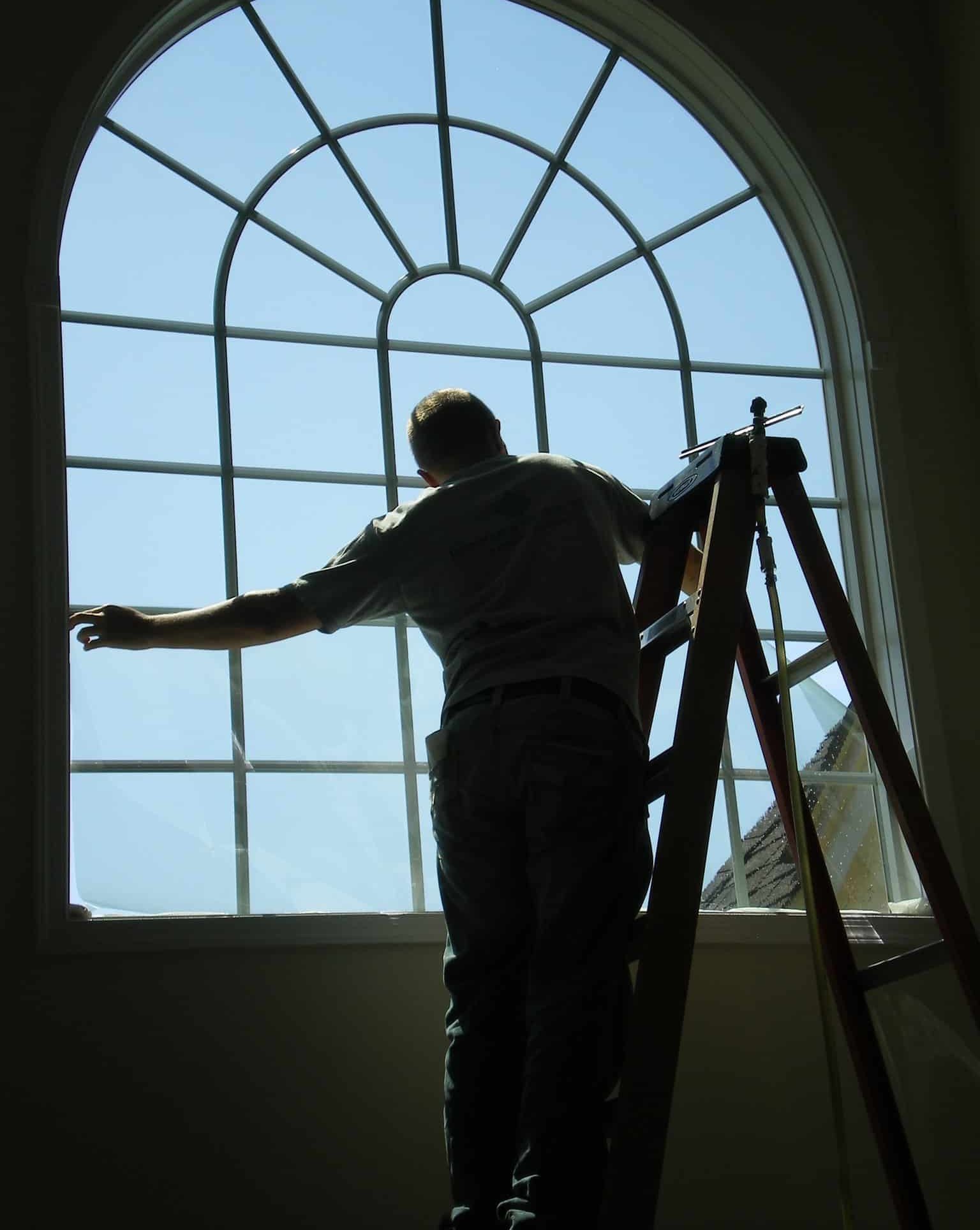
One installation note that matters on estate properties: curved glass, arched transoms, divided-light sash windows, and large fixed panels all require different handling than standard double-hung windows. The equipment, cutting approach, and adhesive management are different. This isn't a job where experience with standard residential installs translates automatically to estate-scale work.
Most homeowners come in thinking they need one thing and leave with a clearer picture of two or three. The practical decision process looks like this:
The right film depends on the glass, the orientation, and what the room is actually being asked to do. A home theater needs different specifications than a glass-walled garden room. Treating every window the same way produces mediocre results across the board.
The Main Line's combination of historic housing stock, open-lot estate properties, and aggressive summer sun creates a set of window film challenges that aren't common in other markets. That context shapes every recommendation Sun Control Specialists makes for properties in this area.
Southeastern Pennsylvania averages roughly 2,500 hours of annual sunshine, with peak intensity concentrated in May through September. The afternoon sun angle during those months is particularly punishing for west-facing rooms, which is a common orientation for great rooms and kitchen additions in estate floor plans designed to capture property views. The UV index routinely exceeds 8 on clear summer days, meaning cumulative interior damage accumulates faster than most homeowners realize.
The region's historic housing stock adds complexity. Properties in Bryn Mawr, Wayne, and Gladwyne frequently include original single-pane sash glass, stained glass transoms, and custom architectural glazing that predates modern insulation standards. These windows need a conservative installation approach. The wrong adhesive system or an incompatible film can stress older glass. Sun Control Specialists has worked on historic and estate-grade glass across the Main Line for over 27 years, which means the edge cases are familiar territory rather than surprises.
HOA compliance is also a local reality that generic window film advice ignores entirely. Lower Merion Township and several Chester County communities have architectural review processes that treat exterior glass modifications as visible changes to the property character. Film selection on these properties isn't just about performance. It's about choosing a product that passes review the first time. For more on our coverage across the region, see the Sun Control Specialists service area page.
Sun Control Specialists has been installing Solar Gard window film on Main Line properties since before most of the film products currently on the market existed. That's 27 years of working on estate homes in Villanova, Bryn Mawr, Wayne, Radnor, Gladwyne, and the surrounding communities. The properties are familiar. The glass types are familiar. The HOA questions are familiar.
We install Solar Gard and Armorcoat films across the full range of residential applications: solar heat reduction, UV protection, glare control, daytime privacy, decorative options, and safety film for large architectural panels. One company handles all of it, which matters on estate properties where multiple film types often need to be spec'd and installed across different areas of the same home.
Estate installations require technicians who know how to handle two-story fixed glass, curved transoms, divided-light historic sash windows, and oversized panels without contaminating adhesive systems or creating visible defects in premium glazing. That's the work we do. The project gallery shows the range. The reviews reflect what homeowners on the Main Line have experienced directly.
If you're working through a film specification decision for an estate property, a consultation is the right starting point. The glass inspection alone usually surfaces details that change the product recommendation.
Here's what matters: Main Line estate homes with large-format windows face a specific combination of solar heat, UV exposure, glare, and privacy challenges that generic window film advice doesn't address. The right film depends on the glass type, the room orientation, and the HOA guidelines in your community. Professional specification and installation aren't optional on estate-scale properties with historic glass, oversized panels, or architectural glazing that requires careful handling.
Your next step: Request a free estimate from Sun Control Specialists or call (610) 735-7064.
It depends on the product. Some solar films have a light reflective quality visible from outside, while others have a neutral tone that's nearly invisible at street level. For Main Line estates where exterior appearance matters to the homeowner and the HOA, Sun Control Specialists specifically selects films with neutral profiles and appropriate reflectance values. In most cases, neighbors and passersby won't notice a difference. We bring film samples to consultations so you can see exactly what the exterior character will look like before anything is ordered.
Yes, but the protocol is different from modern glazing. Original single-pane glass requires a careful surface inspection, appropriate adhesive system selection, and slower, more controlled installation. Certain high-performance films that would work fine on modern double-pane units aren't appropriate for older glass because the thermal stress differential can cause cracking. Sun Control Specialists has extensive experience with historic glass on Main Line estate properties and selects products specifically rated for single-pane applications when that's what the window requires.
Daytime privacy films work based on light differential: when exterior light is stronger than interior light, the film reflects outward and limits visibility into the home. At night, when interior lights are on and exterior light drops, that differential reverses and the film provides less screening. This is a physics reality that applies to all reflective privacy films. For rooms that need consistent nighttime privacy, decorative frosted or etched-pattern film is a better solution. Sun Control Specialists can spec both types across different areas of the same home depending on the specific privacy need in each space.
Yes. Sun Control Specialists works regularly with homeowners in Lower Merion Township, Radnor Township, and Chester County communities that have exterior appearance guidelines. We're familiar with the types of language HOA documents use around reflective materials and exterior glass modifications, and we select films with reflectance values and tone profiles that satisfy those guidelines. In cases where an HOA wants documentation before approving a modification, we can provide product specification sheets showing the film's visible light reflectance and exterior appearance characteristics.
Yes, and in some ways it's a cleaner installation than older single-pane glass. Modern insulated glass units benefit significantly from solar-rejecting film because the film adds heat rejection performance that the glass unit itself doesn't provide. Double-pane windows with standard low-e coatings still transmit a substantial portion of infrared heat and nearly all UV radiation. Adding a quality solar film addresses both. The main consideration is film compatibility with the specific IGU configuration, which is why a glass inspection before product selection matters on any estate property.