
Interactive Tool Try the Film Studio →
Call (610) 735-7064
Get an Instant Estimate
Mon to Fri · 9AM to 5PM
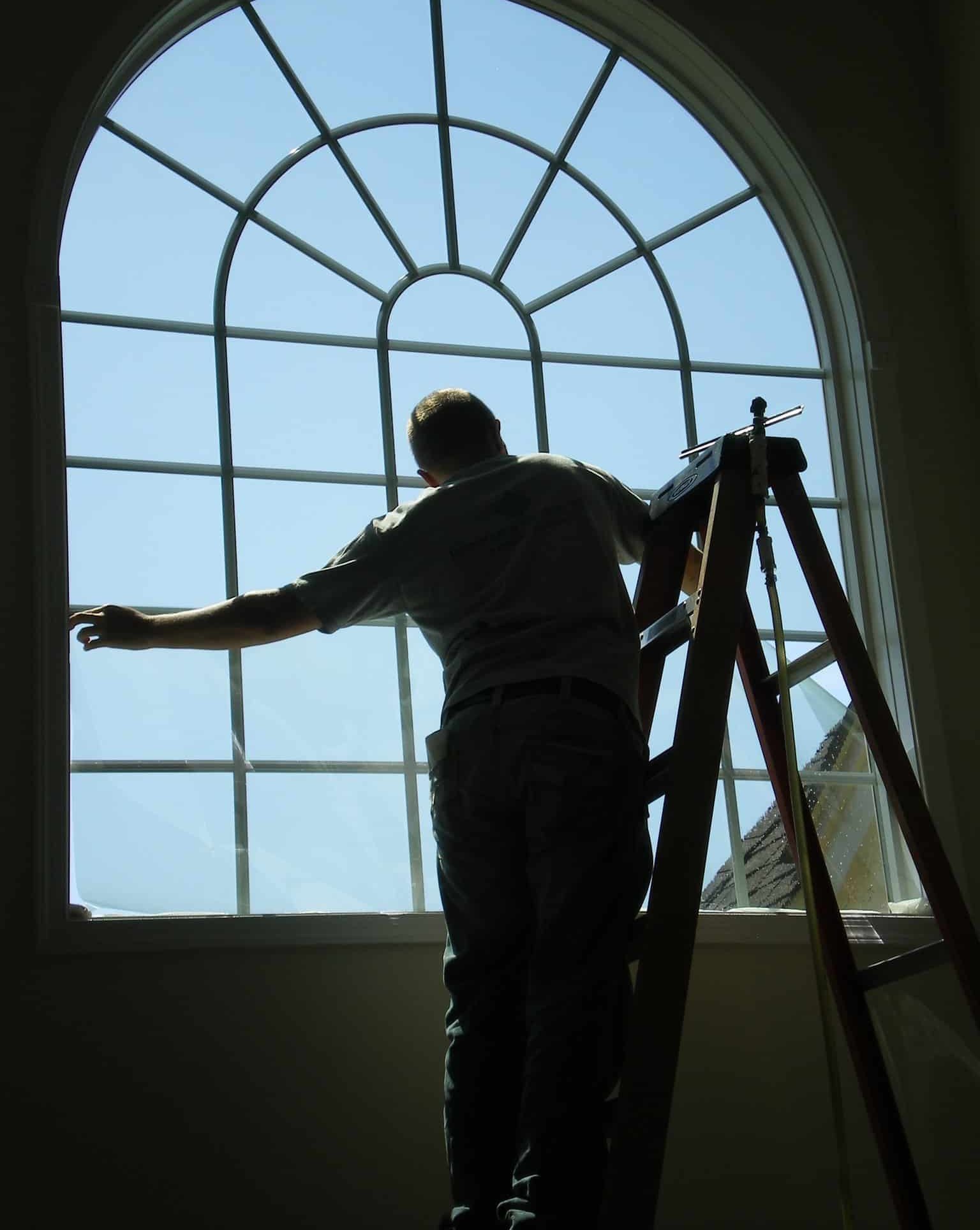
Chambersburg property owners who install professionally specified solar control window film can expect measurably reduced heat gain through glass,...
It's July, and the west-facing living room in your Chambersburg home feels like a greenhouse by 3 p.m. You've got the air conditioning running, the ceiling fan going, and you've pulled the blinds halfway closed so you can still see the yard. None of it fully works. The room is still hot, the furniture is starting to look washed out, and you're starting to wonder if the windows themselves are the problem. They probably are. Untreated glass does almost nothing to stop solar heat gain or UV radiation. It just lets both pour straight through into your space, making your HVAC work harder and slowly degrading everything the light touches.
The same thing happens in commercial properties along Chambersburg's business corridors. Merchandise fades near storefront glass. Conference rooms become unusable in the afternoon. Tenants ask about privacy glass for partitions but balk at full replacement costs. These are solvable problems, and window film is almost always the most practical path forward.
Sun Control Specialists has been installing Solar Gard window film across southeastern and south-central Pennsylvania for over 27 years. This article is written specifically for homeowners and commercial property owners in Chambersburg and Franklin County who want to understand what film actually does, what it doesn't do, and how to make the right call for their building.
Premium window films block up to 99% of UV-A and UV-B radiation, the portion of the solar spectrum responsible for interior fading and a documented skin health concern during prolonged exposure near glass. Solar Gard films are engineered to reject that UV load while keeping visible light transmission intact, so rooms stay bright without the damaging spectrum that breaks down flooring, upholstery, artwork, and merchandise.
UV is only part of the equation. Infrared radiation is what you feel as heat. Solar control films can reduce solar heat gain through glass by 40 to 79 percent depending on the film specification, the glass type, and the window's orientation. That range matters. A south-facing single-pane window in a brick ranch on the south end of Chambersburg has a completely different thermal profile than a double-pane low-e window in a newer commercial build on Norland Avenue. The right film has to match the application.
Visible light is the third variable. Glare from direct sun makes computer screens unreadable and creates uncomfortable brightness in workspaces and living areas. Glare-reducing films lower the intensity of incoming visible light without making a room feel like a cave, which is a common concern we hear from customers who've seen dark tint and assumed that's the only option. It's not. Films with higher visible light transmission can still reject significant heat and block UV, depending on their construction.
For Chambersburg homeowners dealing with fading hardwood floors or a home office that's unusable in the afternoon, UV-protective window film addresses the problem at the glass surface without moving furniture, replacing windows, or permanently blocking the view.
Chambersburg sits in a mixed humid continental climate zone where summer temperatures regularly exceed 85°F, often with high humidity that makes radiant heat feel worse. South- and west-facing windows take the brunt of that load through the afternoon hours, placing sustained thermal stress on unprotected glass and driving up interior temperatures even in air-conditioned spaces. Solar control film reduces that load directly at the glass surface, before it becomes a heat problem inside the building envelope.
Pennsylvania's climate also means cold winters, which introduces a different set of considerations. Film applied in temperatures below 40°F can take significantly longer to cure and is more prone to edge lifting if the installation isn't carefully managed. Spring through fall is the preferred installation window for most residential and commercial jobs in Franklin County, though climate-controlled commercial interiors can extend that range. Sun Control Specialists technicians account for current conditions and will advise you on timing if your project falls in a cold-weather period.
The freeze-thaw cycle that characterizes Pennsylvania winters gets raised by customers fairly often. Properly installed, quality film handles seasonal temperature swings without delaminating or cracking. The key word is properly installed. Edge sealing, correct surface prep, and appropriate adhesive systems matter more in variable climates than they do in consistently warm regions. A film that's been correctly applied to clean, conditioned glass in a 70-degree interior will hold through a Chambersburg winter without issue.
Film selection for Franklin County properties should also account for the mix of older housing stock in Chambersburg's historic neighborhoods and newer construction on the town's expanding residential fringe. Older single-pane glass behaves differently under film than modern insulated units, and the installation protocol changes accordingly. See our window film installation services page for more on how we approach different glass types.
The biggest mistake buyers make is picking a film before defining the problem. Solar control, security, and decorative films do very different things. Applying a solar control film to a window where the actual concern is privacy won't solve the problem, and applying a light decorative frost to a south-facing storefront won't do much for heat either.
Here's how to think through the four main categories:
Choosing the right film requires matching visible light transmission, solar heat gain coefficient, and film construction to the specific orientation, glass type, and performance goal of each window. A one-film-fits-all approach consistently underdelivers.
Before Sun Control Specialists even arrives at your property, there are three things you can do right now to sharpen your project scope and get the most out of the consultation.
None of these require any tools or expertise. They just save time at the estimate and give the installer a clearer picture of what the glass is actually doing to your space.
Most residential and light commercial window film jobs in Chambersburg are completed in a single day. The installation process involves cleaning the glass, cutting film to size, applying it with a slip solution, and using a squeegee to remove air bubbles and excess solution. The room is accessible again almost immediately, but the film needs time to fully cure.
The curing period is typically 30 days. During that time, you'll want to avoid cleaning the film surface and avoid pressing on any areas that look hazy or show small water pockets. Both are normal and will resolve as the adhesive fully bonds to the glass. After the cure period, clean filmed glass with a soft cloth and an ammonia-free solution. Standard household glass cleaners that contain ammonia will degrade the film surface over time. Abrasive scrubbers are also off the list. Beyond those two restrictions, maintenance is minimal.
Commercial-grade Solar Gard products carry manufacturer warranties of 10 years or more. The Panorama PRO product line includes the Panorama PremierPlus Warranty for qualifying installs, which provides additional coverage for commercial applications. The specific warranty terms depend on the film specification and the application type, which is another reason to go through a structured film selection process rather than just picking a product off a spec sheet.
For customers wondering about disruption: film installation doesn't require removing window hardware, moving walls, or any construction-level activity. Furniture near the windows should be moved back a few feet to give the installer working room, but that's typically the extent of the prep required on the customer's end.
Franklin County sits at the western edge of Pennsylvania's south-central region, with a climate profile that runs hotter in summer and colder in winter than the Philadelphia suburbs where Sun Control Specialists does the bulk of its work. That range creates real performance demands on window film, and it's worth being specific about what those demands look like in Chambersburg.
Summer cooling loads in Chambersburg are substantial. The combination of high ambient temperatures and direct solar gain through unprotected glass puts continuous pressure on residential and commercial HVAC systems. Film reduces that load at the source, at the glass, rather than asking the mechanical system to compensate for heat that's already inside the building. Rooms with south- and west-facing glass see the most noticeable improvement.
Historic neighborhoods in downtown Chambersburg present their own considerations. Older single-pane glass is more thermally inefficient than modern insulated units, which makes solar control film a particularly cost-effective upgrade. It's also worth noting that single-pane glass requires a conservative film selection approach to avoid thermal stress issues. Sun Control Specialists has experience with historic and older glass types and adjusts the installation protocol accordingly.
Commercial properties along Chambersburg's main corridors face a different mix of concerns: storefront visibility, merchandise protection, privacy for professional offices, and in some cases security. Our service area includes Franklin County, and we work with both residential and commercial clients throughout the region on a regular basis.
Sun Control Specialists has been installing window film across Pennsylvania for over 27 years. We carry Solar Gard and Armorcoat film products, covering solar control, security, and decorative applications. Every project starts with a site assessment that accounts for glass type, window orientation, interior use, and the specific problem the customer is actually trying to solve. That assessment drives the film recommendation, not a catalog preference.
We don't apply a one-film-fits-all spec. A Chambersburg homeowner dealing with fading hardwood floors gets a different recommendation than a commercial tenant trying to create privacy in a street-facing office, and both get a different recommendation than a business owner installing security film on ground-floor storefront glass.
Our service area includes Franklin County and the Chambersburg region alongside our core coverage across the Main Line, Montgomery County, Chester County, Bucks County, and Delaware County. We bring the same film quality and installation standards to every job regardless of location. If you want to see the work before committing, our project gallery and customer reviews are both worth a look.
Here's what matters: Window film addresses heat gain, UV fading, glare, privacy, and security at the glass surface, without replacing windows. The right film for a Chambersburg property depends on glass type, orientation, and the actual performance problem being solved. Premium Solar Gard films installed by Sun Control Specialists carry manufacturer warranties of 10 years or more and are maintained with nothing more than an ammonia-free cleaner and a soft cloth.
Your next step: Request a free estimate from Sun Control Specialists or call (610) 735-7064.
Not necessarily. Film selection determines how much visible light passes through. Many solar control films are designed to reduce heat and UV while maintaining high visible light transmission. Rooms treated with these films look similar to untreated glass to the naked eye but perform significantly better in terms of heat and UV rejection. If you're concerned about light levels, that's a specific factor we account for during film selection, not something you just accept as a trade-off.
Yes, but the film specification matters. Older single-pane glass is more susceptible to thermal stress than modern insulated units, which means film selection needs to stay within safe solar heat absorption limits for that glass type. Sun Control Specialists has direct experience with older glass and adjusts both the product recommendation and installation protocol accordingly. The goal is to improve performance without creating glass stress that could lead to cracking.
Commercial-grade Solar Gard products are rated for 10 years or more under manufacturer warranty, and properly installed film routinely performs well beyond that range. Pennsylvania's freeze-thaw cycles don't pose a problem for correctly installed film. Edge adhesion, surface prep, and installation technique are the variables that determine long-term performance, which is why installation quality matters as much as product quality.
No. Security film doesn't prevent glass from breaking. What it does is hold the broken fragments together in the frame after impact, which substantially slows forced entry and reduces the risk of injury from flying glass during breakage or storm events. Thicker security laminates (4 to 14 mil) combined with a frame attachment system provide the most effective delay against smash-and-grab incidents. The correct way to think about it: security film buys time, and in most forced entry situations, time is the deterrent.
Decorative film delivers the visual appearance of frosted, etched, or patterned glass without the cost of replacing the glazing. For commercial tenants in particular, this matters because decorative film can be removed or changed when a space is reconfigured or a tenant turns over. Custom etched or frosted glass replacement is permanent and significantly more expensive. For residential applications like shower enclosures, entryway sidelites, or home office partitions, decorative film provides the same privacy function at a fraction of the replacement cost.