
Interactive Tool Try the Film Studio →
Call (610) 735-7064
Get an Instant Estimate
Mon to Fri · 9AM to 5PM
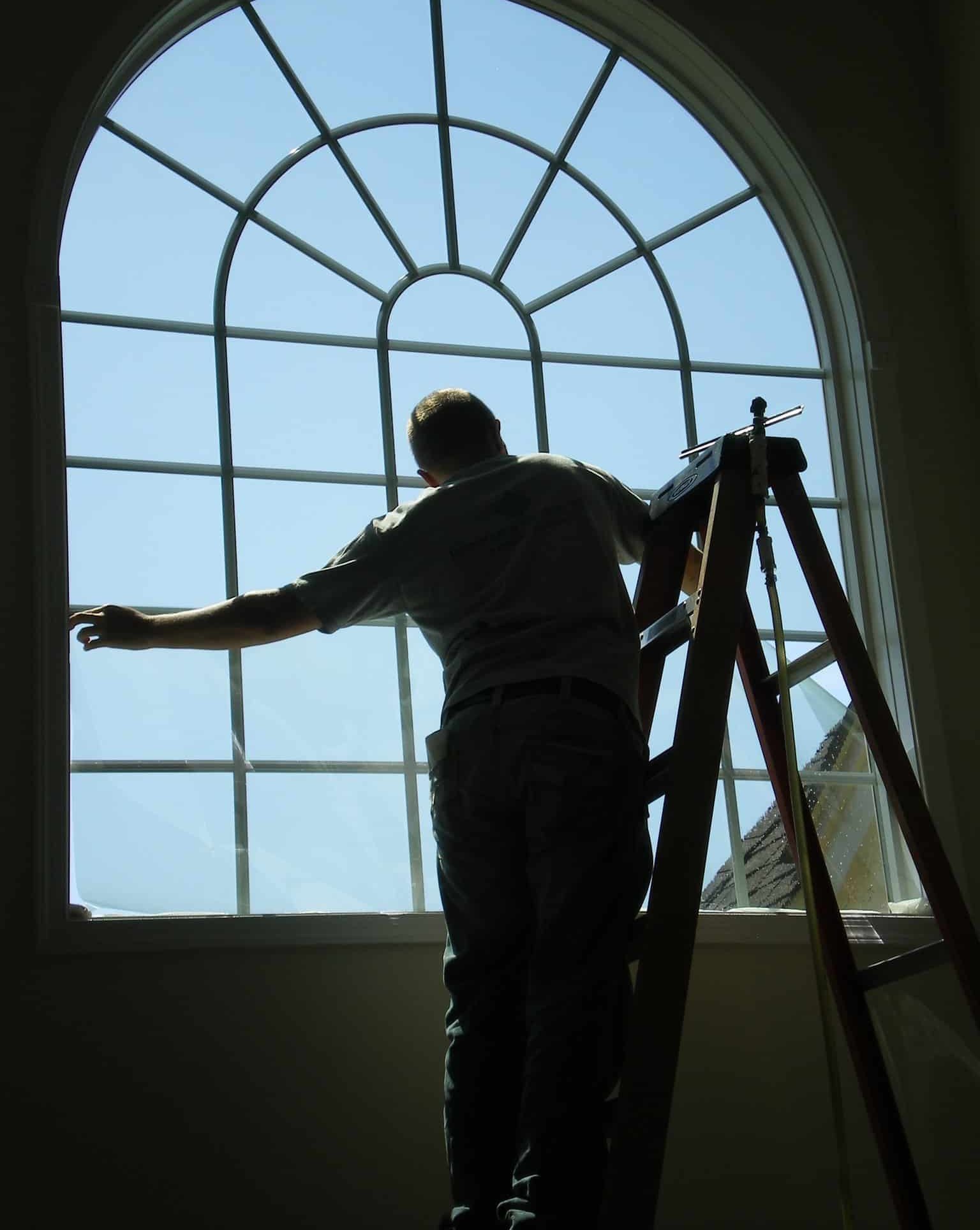
West Chester homeowners who install ceramic window film through Sun Control Specialists reduce cooling costs measurably, protect furnishings from UV...
It's 3 PM on a Wednesday in late July, and the back office of your West Chester storefront feels like the inside of a car parked in a surface lot. Your HVAC is running hard. Your employees have quietly migrated to the front of the building. The thermometer near the south-facing window reads 86°F indoors, and you haven't opened that window in weeks. Or maybe you're at home on Gay Street or out near Goshen, and the living room you spent good money furnishing is now the room nobody uses between noon and dinnertime. The couch fabric is fading. The hardwood near the window has a slightly different tone than it did three years ago. You've been meaning to do something about this.
Window film is probably the most under-discussed solution in Chester County for exactly these problems. It's not glamorous. There's no before-and-after photo that makes people gasp. But for homeowners and business owners dealing with south- and west-facing glass, it solves real problems quickly and at a fraction of what new windows cost. Here's what you need to know before you call anyone.
Glass surface temperatures on unprotected south and west exposures regularly exceed 140°F during West Chester summers. That's not a number pulled from a lab. It's what happens on ordinary July and August days when ambient temperatures climb past 90°F and afternoon sun hits glass directly. At that temperature, the window itself becomes a radiant heat source inside your room, and no thermostat setting fully compensates for it.
Standard single- and double-pane glass transmits roughly 80% of solar energy as heat. Ceramic window films work differently. Instead of simply darkening the glass, they use non-conductive ceramic particles to block infrared heat at the source. Quality ceramic films installed by Sun Control Specialists can reduce heat load through glass by up to 60%, which means your air conditioning is working against a much smaller problem. The room stays usable. The furniture near the window doesn't cook.
For West Chester business owners, this matters beyond comfort. Merchandise fades. Display cases near south-facing glass show sun damage within a single season. Untreated glass allows roughly 99% UV transmission, and UV is the primary driver of premature fading in flooring, fabric, wood finishes, and artwork. Window film blocks 99% of UV regardless of how dark or light the film appears from the outside.
One thing you can do today without calling anyone: use a simple infrared thermometer (under $20 at any hardware store) to measure your window glass surface temperature during peak afternoon hours. That number will tell you clearly how much of your cooling load is coming through the glass versus the rest of the building envelope.
West Chester's mix of historic rowhouses, Colonial-era properties, and modern commercial construction requires different film specifications. There's no single film that's right for every building type in this area, and any installer who recommends the same product for a 200-year-old Federal-style row home and a 2019 office build on Route 202 hasn't thought carefully about the job.
Here's a basic breakdown of the main film categories relevant to Chester County properties:
The right choice comes down to three things: the glass type you have, the direction the window faces, and what specific problem you're trying to solve. Heat rejection films and UV films are not always the same product. A consultation with Sun Control Specialists will identify what your windows actually need rather than defaulting to a one-size approach.
Pennsylvania's window tinting regulations apply to vehicle glass only. The state's 70% visible light transmission (VLT) limit and 20% reflectivity cap have nothing to do with homes or commercial buildings. For residential and commercial window film in Chester County, there is no statewide code restricting how dark or reflective your film can be.
That said, West Chester property owners should check two things before scheduling an install:
One quick step you can take today: pull up your HOA documents or contact your HOA management company and search for any language about window treatments, solar devices, or exterior alterations. In most cases you'll find nothing that restricts window film. But knowing before the install is always better than learning after.
The most common mistake is waiting until July to schedule the work. Window film can be installed year-round in southeastern Pennsylvania, but installers are fully booked by mid-June and stay that way through August. Property owners who call in the middle of a heat wave often wait three to four weeks for an appointment, meaning they suffer through the worst of the summer before seeing any benefit.
Spring is the practical window for scheduling. Milder temperatures and moderate humidity in April and May support clean adhesion and faster curing. The film performs immediately after installation, but curing to full clarity and adhesion takes 30 to 60 days depending on film type and ambient conditions. Scheduling in spring means your windows are fully cured and performing at capacity before the first real heat arrives.
A few other things West Chester buyers frequently overlook:
Another thing you can do right now: walk your property during peak afternoon sun and identify which windows are actually generating the most heat and glare. Prioritize by problem severity, not by room. You may find that four windows on the southwest corner of the building are responsible for most of your discomfort, and addressing those first gives you 80% of the benefit at a fraction of the full-house cost.
Start with the problem, not the product. Before looking at film specs or prices, identify what you're actually trying to fix. Heat and glare in a specific room? UV damage to merchandise or finishes? Privacy along a street-facing elevation? Security concerns at a ground-floor storefront? Each of those problems points toward a different product category, and mixing them up leads to buying a film that addresses the wrong issue.
Once you know the problem, a site visit from Sun Control Specialists will clarify the rest. We'll look at the window orientation, glass type, existing frame condition, and any HOA or historic preservation context. From there we can match the right Solar Gard film to the actual situation rather than defaulting to a catalog recommendation.
If you want to do some preliminary research before calling, check our window film installation services page for an overview of what the process looks like, and review the service area page to confirm we cover your specific Chester County address. We serve West Chester Borough, West Goshen, East Goshen, Westtown, Thornbury, and the broader Chester County area.
Don't overthink the timing. If your windows are already making rooms uncomfortable or you're seeing fading on furniture and flooring, the problem is active right now. Every season without film is more UV exposure, more fading, and more cooling cost you don't recover.
Chester County sits in a climate zone where summer heat is real but winters are cold enough that you don't want to sacrifice solar gain entirely. That balance is where film selection matters most. Some darker commercial films that work well in Georgia or Arizona are simply too aggressive for a property in West Chester that needs passive solar warming in January and heat rejection in July. The right ceramic film threads that needle by selectively blocking infrared heat while maintaining visible light transmission.
West Chester also has a higher-than-average concentration of historic and architecturally significant properties. East and West Market Street, the streets running off High Street, and dozens of surrounding residential blocks include buildings with original glass dating back well over a century. That glass is fragile in specific ways. It cannot tolerate the same heat-absorbing films appropriate for modern insulated glazing units. The film specification has to match the glass, not just the room's orientation.
On the commercial side, West Chester Borough's walkable downtown means storefronts face direct foot traffic and high visibility. Film choices here affect curb appeal, interior comfort for employees and customers, and in some cases the security of the ground-floor glass. Sun Control Specialists works regularly along the Route 30 corridor and throughout the Route 202 commercial zone in addition to the Borough itself.
Sun Control Specialists has been installing Solar Gard window film across southeastern Pennsylvania for over 27 years. That's not a marketing number. It means we've worked on historic Main Line estates, modern office parks in Malvern and Exton, retail storefronts in downtown West Chester, and residential properties across Chester County in every configuration you can imagine.
We install Solar Gard and Armorcoat films exclusively, which means we know those product lines at a technical level that general contractors or inexperienced tinters don't. We carry films suited to preservation-grade historic glass, high-performance ceramic applications, security and anti-intrusion installs, and decorative privacy work. Most jobs don't need all of those categories, but knowing the full range means we're not forcing the wrong solution onto your windows because it's the only product we carry.
If you want to see actual completed work before calling, the project gallery shows residential and commercial installs across the region. Reviews from Chester County and Main Line customers are on the reviews page. We're happy to answer specific questions before you schedule anything. Call (610) 735-7064 or reach out at [email protected].
Here's what matters: West Chester homeowners and business owners dealing with heat, glare, UV damage, or high cooling costs through south- and west-facing windows have a direct solution that doesn't require window replacement. The right Solar Gard film, properly matched to the glass type and building context, addresses those problems at a fraction of alternative costs. Pennsylvania has no residential or commercial tinting restrictions, and most HOA and historic district situations are manageable with the right film choice.
Your next step: Request a free estimate from Sun Control Specialists or call (610) 735-7064.
Yes, but the film selection has to be appropriate for the glass. Original single-pane windows are more vulnerable to thermal stress than modern insulated glazing units, so preservation-grade films with lower heat absorption are required. Sun Control Specialists has experience with historic glass throughout Chester County and specifies films accordingly. We don't install high-absorption films on original glass.
It depends on the film. Many ceramic films in the mid-range reject significant heat while maintaining 50 to 70% visible light transmission, which most people find barely perceptible indoors. If you're prioritizing heat rejection without visible darkening, Nano Ceramic Hilite is worth discussing. If privacy is part of the goal, some degree of darkening may be intentional. We'll show you actual samples before anything gets installed.
Solar Gard films are warrantied for extended periods depending on the product line. Panorama PRO films carry the Panorama PremierPlus Warranty. In practice, properly installed ceramic films on residential glass in this climate routinely perform well for 15 to 20 years without peeling, bubbling, or significant color shift. Film longevity is closely tied to installation quality and proper surface preparation.
Sometimes, with important caveats. Low-E coatings on modern double-pane windows already provide some solar rejection, and adding certain films on top can cause excessive heat buildup in the airspace between panes, which risks seal failure. An experienced installer evaluates the glass unit type before recommending any film. Sun Control Specialists will identify whether your windows have existing coatings and what films are compatible.
In most residential and commercial applications, the view from inside is minimally affected, especially with modern ceramic films. Glare reduction can actually improve visual comfort near windows by cutting harsh brightness without adding a noticeable tint to the view. Highly reflective or very dark films do affect the view more significantly, but those aren't typically the right choice for most West Chester residential applications anyway.