
Interactive Tool Try the Film Studio →
Call (610) 735-7064
Get an Instant Estimate
Mon to Fri · 9AM to 5PM
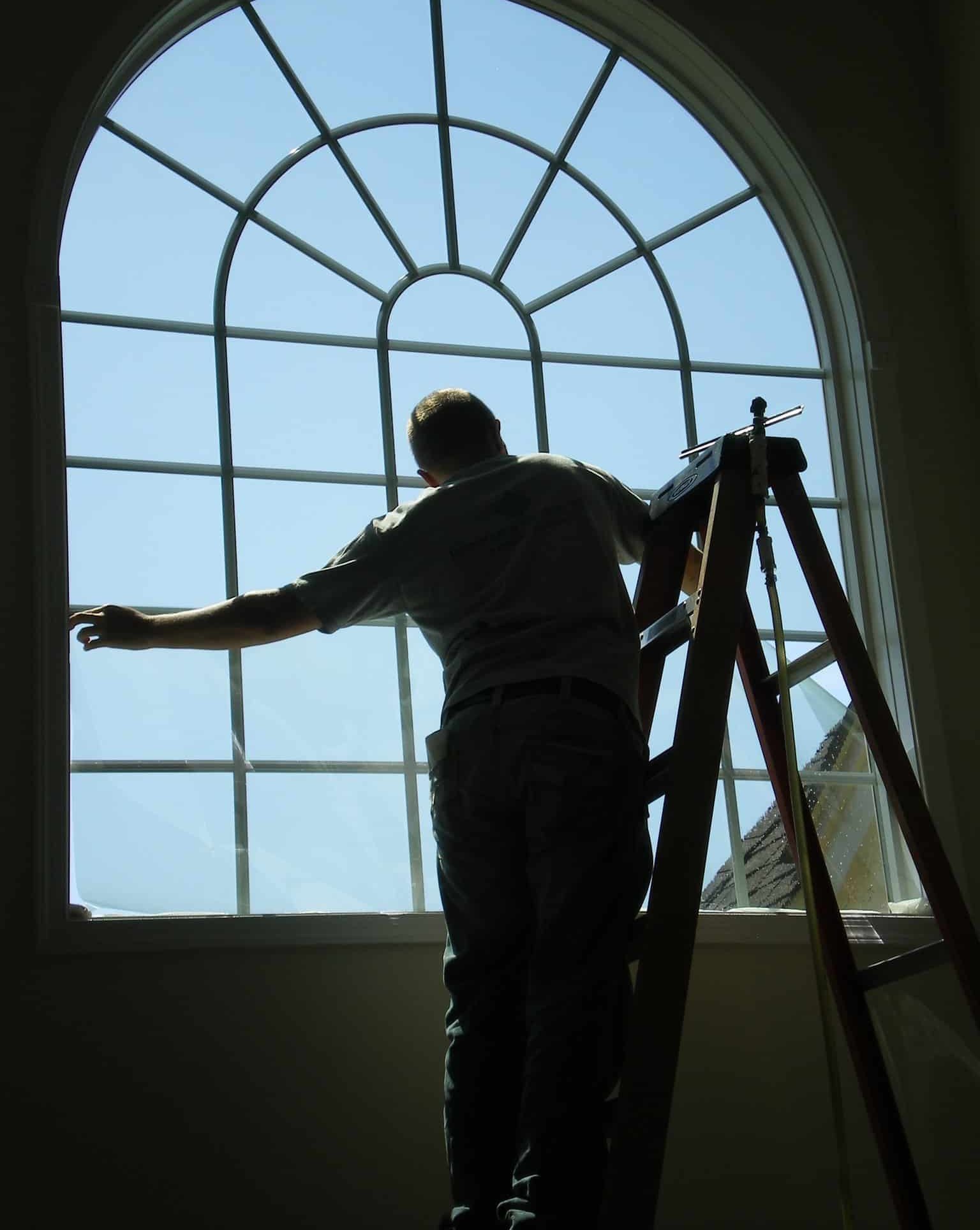
North Wales homeowners gain a clear, locally grounded understanding of what window tinting and security film actually cost, how they perform, and which...
It's July, the sun is hammering the south-facing windows in your North Wales living room, and the room feels like a greenhouse by 2 p.m. You've already moved the furniture away from the glass. The blinds are down, which means the room is dark and still hot. Your central air is running constantly, and your BGE Home bill confirms what you already suspected. You've looked at window film online, found prices ranging from $3 a roll to numbers you can't quite believe, and now you're more confused than when you started.
That's a pretty common starting point for homeowners throughout Montgomery County. North Wales sits in a climate zone that punishes west- and south-facing glass from May through September, and the newer construction throughout the area (think the planned communities off Route 202 and around Montgomeryville) tends to favor large windows that look great on a listing sheet but can be brutal in practice. This guide covers what film actually does, what it costs, what security film can and can't do, and how to figure out if it makes sense for your home or business without wasting an afternoon going down an online rabbit hole.
Sun Control Specialists has been installing Solar Gard window film across southeastern Pennsylvania for 27 years. What follows is how we'd explain this to a neighbor.
Window film reduces solar heat gain at the glass surface before it enters the room. Standard double-pane windows, even good ones, still transmit a significant percentage of solar energy as heat. On a south or west elevation, that translates directly to overheated rooms, stressed HVAC systems, and real money on your cooling bill every summer.
Solar control film works by reflecting and absorbing a portion of the solar spectrum at the glass. The better the film, the more infrared energy it blocks without significantly reducing visible light. Quality solar films installed by Sun Control Specialists can reduce cooling costs by up to 30 percent, with most residential projects recouping installation costs within three to five years based on energy savings alone.
What surprises most North Wales homeowners is the secondary benefit in winter. Certain film products, particularly the thicker, higher-performance options in the Solar Gard line, also help retain interior heat by reducing radiant heat loss through the glass. That's a genuine mid-Atlantic climate benefit. Southeastern Pennsylvania isn't the Sun Belt and it isn't Minnesota, but the swing between a July afternoon and a January night is wide enough that a film doing useful work in both directions is worth paying attention to.
The practical takeaway: film does the most work on glass that receives direct sun for two or more hours per day. A north-facing bedroom window probably doesn't need it. The living room wall of glass facing southwest? That's exactly where it earns its cost.
Today's quick win: Walk through your home between noon and 3 p.m. on a clear day. Any room where you can feel warmth radiating from the glass surface, or where you instinctively avoid sitting near the windows, is a candidate. Note the compass orientation of those windows. That information is the most useful thing you can bring into a film consultation.
Security film doesn't make glass unbreakable. What it does is keep broken glass in the frame, and that distinction matters a lot in a real forced-entry scenario. Standard single-pane and double-pane windows, once broken, create an immediate entry point. A person with bad intentions can clear the glass in seconds and be inside before any alarm system has time to respond.
Security film changes that dynamic by bonding the glass fragments together after impact. The glass still breaks, but it stays in the frame as a rigid, jagged mass rather than collapsing inward. Getting through it requires sustained effort, noise, and time. That combination deters opportunistic break-ins because most smash-and-grab entries rely on speed. If the window doesn't give on the first strike, many intruders move on.
Sun Control Specialists installs Solar Gard Armorcoat security film for exactly this purpose. It's a deterrent layer that buys response time. We're straightforward about what it does and doesn't do. It is not a bulletproof barrier. It won't stop a determined person with adequate tools and enough time. What it does do is eliminate the easy, fast entry point that standard glass provides, and that's a meaningful upgrade to the security profile of any home or ground-floor commercial space.
For North Wales homeowners, the most common security film candidates are sidelights next to entry doors, ground-floor windows in less-visible areas of the house, and garage entry windows. Business owners on the Route 309 corridor or in Montgomeryville's commercial zones often prioritize storefront glass and rear-entry windows.
One important note on installation: security film requires an edge-retention system called an anchoring attachment system to perform correctly. Film applied to glass but not anchored to the frame is significantly less effective. Any installer who doesn't mention this in the estimate conversation is missing a critical step. We don't skip it.
Learn more about our anti-intrusion security film installation and how we approach forced-entry deterrence for residential and commercial properties.
This is the question that stops more North Wales homeowners from moving forward than any other, and the concern is largely based on outdated assumptions about what window film looks like. The dark, mirror-finish tint associated with commercial office towers from the 1980s is a specific product choice, not an inherent property of window film. Modern solar control films are available in a range from nearly invisible to moderately tinted, with reflectivity levels to match.
Because film is applied to the interior glass surface, it changes very little about the exterior appearance of the window. From the street, a well-selected film is typically invisible or indistinguishable from the glass itself. Sun Control Specialists selects film products specifically designed to be neutral or compatible with HOA appearance guidelines common throughout Montgomery County's planned communities.
If your neighborhood requires approval for exterior modifications, window film applied to the interior surface generally falls outside that requirement entirely. That said, HOA documents vary, and some associations have language around window appearance. Our recommendation: review your HOA's specific guidelines before scheduling installation. If there's any ambiguity, we can provide product samples and technical specs to help you get approval documented before work begins.
The Solar Gard Nano Ceramic Hilite line is a good example of where the technology has gone. These films provide strong solar performance with very low interior and exterior reflectivity. From inside, the view stays clear. From outside, the windows look like windows. For homeowners in North Wales and neighboring Lansdale who've hesitated because they don't want their house to look like a strip mall, these products resolve that concern directly.
Today's quick win: Pull out your HOA documents or resident handbook and search for the words "window," "glass," and "exterior modification." Most HOA restrictions address things applied to or visible on the exterior facade. Interior-surface film rarely triggers these provisions, but knowing your specific language before you call for a quote saves time.
Online pricing ranges are wide enough to be nearly useless for planning purposes. A realistic budget for a typical North Wales residential project covering 10 to 15 windows runs from roughly $1,000 to $3,000, with film type being the primary driver of where within that range you land.
Here's what actually moves the number:
Sun Control Specialists provides in-person estimates rather than online flat-rate quotes. That's not a sales tactic; it's how you get an accurate number. Two homes in the same North Wales development can have meaningfully different project scopes based on window configuration alone. The estimate visit is also when we can identify any glass warranty implications from the film application, which matters more on newer construction with coated glass than on older homes.
On warranty: Solar Gard residential films carry a limited lifetime warranty. Commercial installations are backed by a 12-year warranty. This is a professional-grade product line not available at home improvement stores, and the warranty is only valid through certified installers. That's a meaningful distinction when you're comparing a quote from a certified installer to a DIY kit from the internet.
Today's quick win: Before calling for an estimate, measure the glass area (not the window frame) of your five most problematic windows. Write down the room name, the compass direction the window faces, and whether the glass is single- or double-pane. Bringing that information to a consultation cuts 20 minutes off the estimate conversation and helps you get a useful number faster.
Not every home needs film on every window. Here's a straightforward framework for deciding where to start.
Start with the problem, not the product. If the issue is a room that overheats between noon and 4 p.m., you're looking at solar control film on south- or west-facing glass. If the concern is a break-in vulnerability, you're looking at security film on ground-floor and entry-adjacent glass. If you want to block the view into a first-floor bathroom or home office without losing light, you're looking at decorative or privacy film. These are different products with different installation considerations, and treating them as interchangeable leads to the wrong result.
Prioritize by exposure and risk. Map your home by sun exposure and security vulnerability. The windows that get the most direct sun and the windows that are most accessible from the outside are your highest-priority candidates. You don't have to film everything on the first pass.
Ask about glass compatibility before committing. Some newer windows have factory-applied low-E coatings that interact with certain film products. Applying the wrong film to a coated window can void the glass manufacturer's warranty. A qualified installer will assess this before recommending a product. We always check.
Consider timing. Spring and fall are the optimal installation seasons in southeastern Pennsylvania because moderate ambient temperatures support cleaner adhesive curing. Summer and winter installations are entirely routine and produce excellent results, but curing windows may need to remain undisturbed a bit longer in cold weather. If you're planning for next summer, a spring installation appointment is worth scheduling early.
Check out our window film installation services page for a fuller picture of what the installation process looks like from first call to final inspection.
North Wales and the surrounding townships sit in a climate that creates real, recurring problems for glass-heavy homes. Summer afternoons in Montgomery County regularly push into the low 90s with high humidity, and the solar angle between May and September puts significant direct-sun load on south and west elevations for most of the day. That's not a Florida or Arizona problem transferred north; it's a genuine regional issue that makes solar control film a practical investment rather than an optional comfort upgrade.
The planned communities throughout North Wales, Lansdale, Montgomeryville, and neighboring Blue Bell were largely built over the past 30 years, which means two things. First, many homes have large window packages that were designed for curb appeal and natural light rather than solar management. Second, a significant number of these homes still have original windows with no additional solar control beyond standard low-E coatings, which help but don't eliminate solar heat gain on directly sun-exposed glass.
Historic homes are less common in North Wales proper than on the Main Line or in Chester County, but they exist throughout the broader Montgomery County area. Sun Control Specialists has specific experience with original glass in historic and estate properties, where installation protocol is more conservative and product selection requires extra attention. If you have pre-1940 glass, that's a conversation worth having before any installation.
Our service area covers North Wales, Lansdale, Blue Bell, Montgomeryville, and the full Montgomery County residential and commercial market, as well as Bucks County, Chester County, Delaware County, and selected Philadelphia neighborhoods.
Sun Control Specialists has been installing Solar Gard window film across southeastern Pennsylvania for 27 years. That kind of tenure in a specific regional market means we've seen the glass types, the HOA situations, the historic buildings, and the new construction product decisions that come up in this area. We're not working from a national franchise playbook.
We install Solar Gard and Armorcoat films exclusively, which gives us deep product knowledge and access to warranty support that general contractors or handymen offering film as an add-on service can't match. Solar Gard is a professional-grade product line not sold through retail channels, and its lifetime residential warranty and 12-year commercial warranty are only valid through certified installers.
Our work covers residential solar control, security film, decorative film, and historic glass installs across the Main Line, Bucks County, Chester County, Montgomery County and Delaware County. If you've seen reflective film on a commercial building in the area that looks sharp and clean after years of exposure, there's a reasonable chance we installed it.
We give in-person estimates because a number over the phone isn't useful to you. When we come out, we assess the glass, the exposure, the existing conditions, and the specific problem you're trying to solve. Then we recommend the right product for that situation, not the most expensive one.
See what previous clients have experienced on our reviews page, or browse completed projects in the project gallery.
Here's what matters: Window film is a practical, cost-effective upgrade for North Wales homeowners dealing with solar heat gain, UV damage to interiors, security vulnerabilities, or HOA-compatible privacy needs. Solar Gard films installed by Sun Control Specialists block more than 99 percent of UV radiation across every product type, and solar control films can reduce cooling costs by up to 30 percent. Security film won't stop a determined entry with unlimited time, but it eliminates the fast smash-and-grab scenario that most residential break-ins rely on. For a typical 10 to 15 window home, a professional installation is a realistic investment that pays back in energy savings, interior preservation, and peace of mind.
Your next step: Request a free estimate from Sun Control Specialists or call (610) 735-7064.
Solar Gard residential films carry a limited lifetime warranty when installed by a certified installer like Sun Control Specialists. In practical terms, professional-grade film installed correctly on interior glass surfaces typically lasts 15 to 25 years before showing signs of adhesive breakdown or discoloration. Film that peels or bubbles prematurely is almost always a product quality or installation issue, not an inherent limitation of the technology.
Some low-E coatings on newer double-pane windows can interact with certain film products, and applying the wrong film to a coated window can void the glass manufacturer's warranty. This is one of the main reasons Sun Control Specialists performs an in-person assessment before any installation. We identify the glass type and coating status before selecting a product, and we'll tell you directly if a particular film isn't compatible with your windows.
Yes. Most residential projects in the North Wales area are completed in a single day or across two days for larger homes. There's no technical reason to phase a project unless budget requires it. If you are phasing, start with the highest-exposure and highest-priority windows first. The rooms that overheat and the ground-floor windows with security concerns are the logical first pass.
Modern solar control films, particularly the Nano Ceramic Hilite products in the Solar Gard line, are designed to block solar heat and UV radiation while maintaining high visible light transmission. Most homeowners report that the interior looks essentially unchanged after installation. Films that cause significant light reduction exist, but they're not the right choice for most residential applications. We match the film to what the room actually needs, which usually means prioritizing heat reduction without sacrificing daylight.
Retail film is available in home improvement stores, and some homeowners do install it themselves. The results vary significantly. DIY installation on standard flat glass in a small window is achievable for someone patient and detail-oriented. Security film installed without proper edge anchoring performs well below its rated capability. Any window with coatings, curves, or irregular glass is a difficult DIY application. And the Solar Gard warranty is only valid through certified installers. For a straightforward solar control project on standard windows, DIY is a reasonable consideration. For security film or any glass type that isn't basic flat double-pane, professional installation is the right call.